Level 2 home charging for your electric vehicle. Pair with solar and charge for free. Our licensed electricians handle everything — panel upgrades, wiring, and charger installation.
Level 2 ChargingLic# C-13 ElectricalSolar + EV IntegrationPanel Upgrades
We install all major Level 2 charger brands. A Level 2 charger (240V) adds 25-30 miles of range per hour — a full overnight charge for most EVs.
Most Popular
Tesla Wall Connector
For Tesla vehicles and other EVs
PowerUp to 48A / 11.5 kW
Charge Rate~30 mi/hr
ConnectivityWi-Fi, Tesla app
Cable Length24 feet
Power SharingUp to 6 units
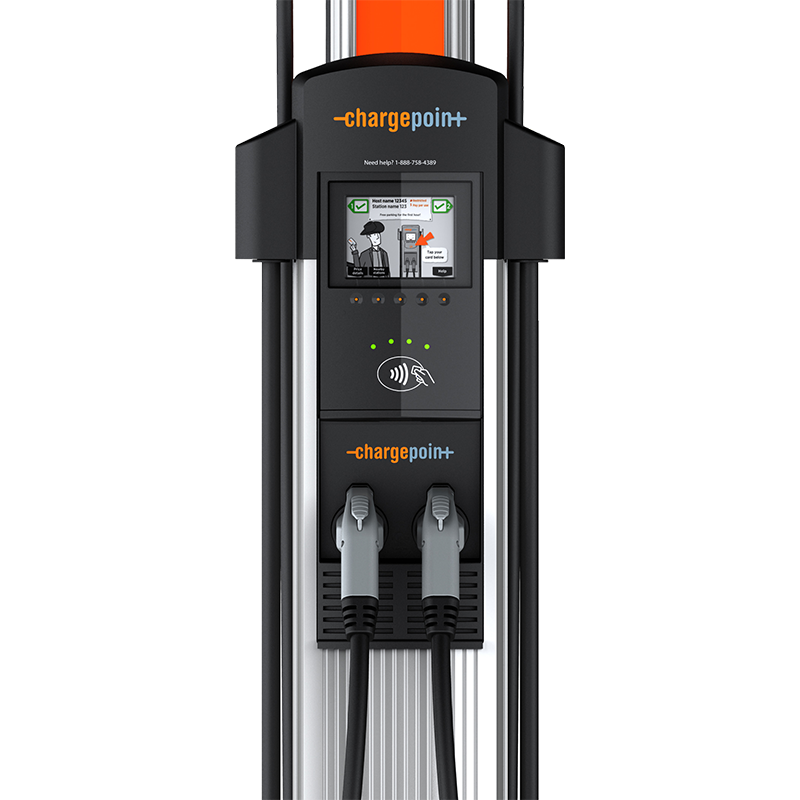
ChargePoint Home Flex
Universal J1772 connector
PowerUp to 50A / 12 kW
Charge Rate~37 mi/hr
ConnectivityWi-Fi, ChargePoint app
CompatibilityAll EVs (J1772)
SchedulingApp-based TOU scheduling
Emporia EV Charger
Built-in energy management
PowerUp to 48A / 11.5 kW
Key FeaturePowerSmart load management
NEC ApprovedNFPA 70, 625.42 & 750.30
AvoidsPanel upgrades in many cases
MonitoringReal-time via Emporia app
Avoiding Panel Upgrades with Energy Management
A 200-amp panel upgrade can cost $2,000–$4,000 and add weeks to your project. But many homes do not actually need one. Modern energy management systems (EMS) are NEC-approved alternatives that let you add a 48-amp EV charger to an existing 100A or 150A panel by intelligently managing the load.
DCC-12 (by RVE)
The DCC-12 is a patented Electric Vehicle Energy Management System that connects directly to your existing panel. It monitors total home consumption in real time and temporarily pauses EV charging when your panel approaches 80% capacity, then resumes automatically when load drops. UL Listed and NEC Article 750 compliant. Often the simplest and most affordable solution for homes with limited panel capacity.
Emporia PowerSmart
Built directly into the Emporia EV charger. Uses the Emporia Vue energy monitor to track every circuit in your panel, then dynamically adjusts the EV charge rate so total draw never exceeds your panel's rating. Approved under NEC NFPA 70, Sections 625.42(B) and 750.30 — which explicitly allow a listed EMS to manage load up to 100% of panel capacity. For many homes, this eliminates the need for a panel upgrade entirely.
SPAN Smart Panel & SPAN Drive
For homeowners who do need a panel upgrade — or want whole-home energy visibility — the SPAN smart electrical panel replaces your traditional breaker box with a 200A panel where every circuit has its own dedicated power meter and relay. You can monitor and control every circuit from your phone in real time.
What makes SPAN relevant for EV charging: the SPAN Drive charger integrates directly with the panel, delivering up to 48A (11.5 kW) while dynamically adjusting charge rate based on total home load. If you turn on the oven and the dryer while your car is charging, SPAN automatically reduces the charge rate to keep total consumption within your panel's capacity — then ramps it back up when those loads stop. This means many homes can run a 48A charger on a panel that would otherwise be overloaded.
SPAN also integrates with solar inverters and batteries (Tesla, Enphase, SolarEdge), so you can see exactly how much of your EV charging is coming from solar versus the grid. In 2026, Eaton invested $75M in SPAN, confirming that smart panels have moved firmly into the mainstream.
A SPAN Panel runs about $3,500 before installation — more than a traditional panel but far more capable. It qualifies for a 30% federal tax credit (up to $600) under the residential clean energy credit.
Which Approach Is Right for Your Home?
Solution
Best For
Approx. Cost
DCC-12
Homes with tight panel capacity, minimal disruption, budget-conscious
$400–$600 + install
Emporia PowerSmart
Homes wanting EV charger + whole-home energy monitoring in one product
$500–$800 (charger + monitor)
SPAN Panel + Drive
New panel upgrade needed anyway, want full smart home energy control
$3,500–$5,000 + install
Traditional 200A upgrade
Panel is old/damaged, adding solar + battery + EV simultaneously
$2,000–$4,000
During your free site visit, our licensed electricians assess your existing panel capacity and recommend the right approach. Sometimes an EMS device saves you $3,000 over a panel upgrade. Sometimes the panel genuinely needs replacing and a SPAN upgrade makes the most sense long-term. We do not push one solution over another — we recommend what fits your situation.
Charge Your EV with Solar — Drive for Free
The average Hawaii EV driver spends $50-$100/month on electricity for charging. With solar panels, that cost drops to near zero.
Daytime Solar Charging
If your EV is home during the day, charge directly from solar panels. Zero electricity cost.
Battery-Buffered Charging
Powerwall stores solar during the day. Charge your EV overnight from stored solar energy.
HECO TOU Rate Optimization
HECO offers EV-specific time-of-use rates. Schedule charging during off-peak for lowest grid rates.
One Contractor Does It All
Solar, battery, and EV charger installed together. One electrical plan, one permit, one project.
EV Charger Installation
$1,200 – $3,500
Includes charger, installation, and electrical work. Panel upgrade (if needed) is additional. Price varies by charger model, distance from panel, and electrical requirements.
It depends on your current panel capacity. A Level 2 charger typically needs a 40-60A dedicated circuit. If your panel is already near capacity (common with older 100A panels), an upgrade to 200A may be needed. We assess this during the free site visit.
With a Level 2 charger (240V), most EVs charge from 20% to 100% in 6-10 hours overnight. This adds about 25-30 miles of range per hour of charging. A standard 120V outlet (Level 1) only adds 3-5 miles per hour, which is too slow for most drivers.
Yes. If your EV is home during the day, it can charge directly from solar. For overnight charging, a Powerwall can store solar energy during the day and deliver it to your charger at night. Either way, you can effectively drive on sunshine.
HECO offers EV-specific time-of-use rates for residential customers. These rates incentivize charging during off-peak hours (typically overnight) when electricity is cheapest. Smart chargers can automatically schedule charging during these windows. With solar, you may not need the EV rate at all.