A customer in Mililani told us something last year that stuck. He said the moment he realized he would never buy gasoline again was when he drove past the Costco station on his way home and noticed the line wrapping around the building. Gas was $5.19 a gallon. He was driving a Tesla Model Y charged entirely from the panels on his roof. His fuel cost that month was zero.
Hawaii is one of the best places in the country to own an electric vehicle and one of the worst places to charge one from the grid. Electricity here runs $0.35 to $0.42 per kilowatt-hour. Swapping expensive gasoline for expensive electricity is an improvement, but not a dramatic one. Charging from your own solar panels is the move that changes the math completely.
Why EVs and Hawaii Are a Natural Fit
The average Oahu commute is under 30 miles round trip.[2] You could do that on a quarter charge in most EVs. There is no range anxiety when the farthest you can drive is the North Shore and back. No extreme cold to sap battery capacity. And overnight home charging means you start every morning full.
Tesla Model Y and Model 3, Chevrolet Equinox EV, Hyundai Ioniq 5, Toyota bZ4X — these are the vehicles filling up the parking structures in Kapolei and the driveways in Hawaii Kai. Island driving is almost perfectly suited to EVs. Short distances, mild weather, garage charging overnight.
The Cost Math
Here is where it gets interesting.
Charging from the grid at HECO's residential rates — roughly $0.40 per kWh[3] — a typical EV driving 12,000 miles a year needs about 3,000 to 4,000 kWh of electricity.[4] That is $1,200 to $1,600 annually. Cheaper than gasoline at $4.50 to $5.00 a gallon (a 30 mpg car costs $1,800 to $2,000 a year in fuel), but the savings are modest. You traded one expensive energy source for a slightly less expensive one.
Now charge from solar. If your system is sized to cover the EV load, the marginal cost of charging is zero. Your panels are paid for through your overall system financing, which is typically less than your old electric bill anyway. The additional solar capacity for EV charging adds relatively little to the total system cost.
Annual EV charging cost from solar: $0. Annual savings versus grid charging: $1,200 to $1,600. Annual savings versus gasoline: $1,800 to $2,000. Over 10 years: $18,000 to $20,000 that stays in your pocket instead of going to the gas station or HECO.
Level 2 Charging at Home
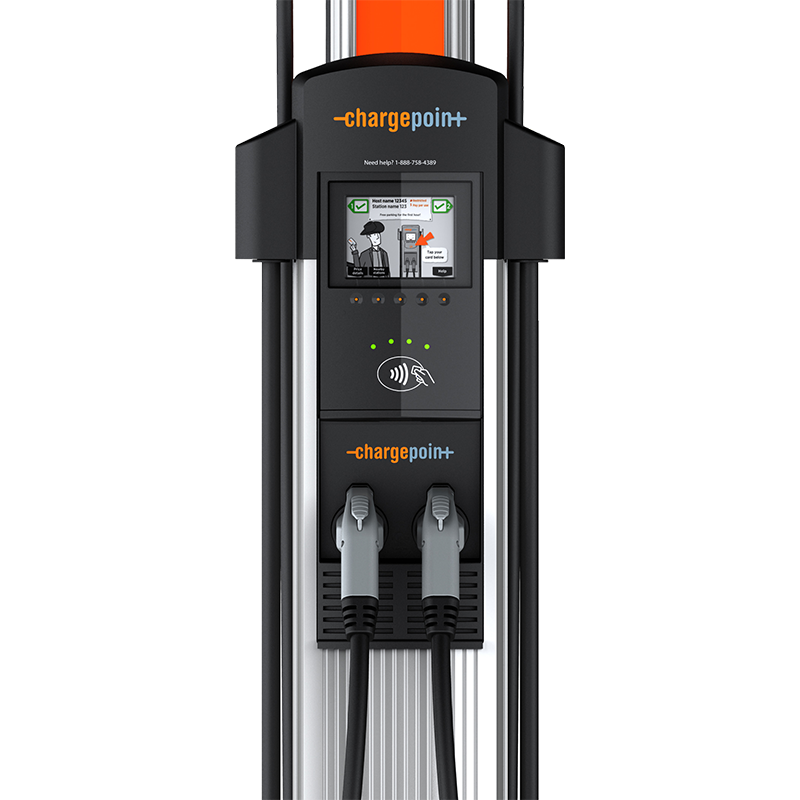
Most EV owners charge overnight on a Level 2 charger — a 240-volt unit, same voltage as your dryer or stove. It adds about 25 to 30 miles of range per hour of charging, which means a typical day's driving replenishes in about 2 hours.[5] Most home chargers draw 32 to 48 amps. A 48-amp charger on a 60-amp circuit delivers about 11.5 kW of charging power.
Installation requires a dedicated 240V circuit from your electrical panel. Professional installation ensures the wiring is right, the breaker is sized correctly, and the work meets code. Modern chargers come with Wi-Fi, scheduling, and energy monitoring built in — features that matter when you are coordinating charging with solar production and time-of-use rates.
Level 3 DC fast charging is for road trips and commercial use. You do not need it at home, and it requires commercial-grade electrical infrastructure that does not make sense for residential.
Sizing Your Solar for EV Charging
The math is straightforward. A typical EV consumes 3,000 to 4,000 kWh per year. In Hawaii, each kilowatt of solar panel capacity produces about 1,500 kWh annually. So you need an additional 2 to 3 kW of panels — roughly 5 to 7 extra panels on your roof.
For a home installing a new system, this is a modest add-on. A house that needs 8 kW for household electricity might size up to 10 or 11 kW to cover the EV too. The incremental cost of those extra panels runs $4,000 to $6,000 before tax credits, and they save $1,200 to $1,600 per year in avoided charging costs. That is a 2 to 4 year payback on the incremental investment alone.
Use our solar calculator to model a system that includes EV charging capacity.
HECO Time-of-Use Rates and EVs
Hawaiian Electric's time-of-use rate structure charges the most during on-peak evening hours (typically 5 to 10 PM), when grid demand is highest and solar generation is fading.[6] Off-peak rates are lower, with midday being cheapest when solar floods the grid. Overnight rates are generally the lowest.
If you are charging from the grid, scheduling your charger for overnight hours can cut costs 20 to 30 percent versus plugging in at 6 PM when you walk in the door. Smart chargers automate this.
If you have solar, the TOU rates barely matter for your charging costs — you are using your own electricity. Where they matter is in maximizing the value of your solar exports and minimizing the cost of whatever grid electricity you still consume.
The Powerwall Buffer
Here is the scenario that trips people up: you drive to work during the day, which is when your panels are producing. Your car is sitting in a parking garage in downtown Honolulu while all that solar energy has nowhere useful to go. You come home at 6 PM, plug in, and charge from the grid at peak evening rates.
A Powerwall solves this. During the day, your panels charge the battery instead of the car. In the evening, you plug in and the Powerwall discharges its stored solar energy to your Level 2 charger. Your EV charges from sunshine that was collected eight hours earlier. No grid power, no peak rates.
Without a Powerwall, solar EV charging only works when the car is home during daylight — weekends, work-from-home days. With a Powerwall, you solar-charge your EV every night regardless of your schedule. One of our customers in Kaimuki, a nurse who works day shifts at Queen's, has been doing exactly this for two years. She has not paid for a kilowatt-hour of EV charging since the system went live.
Plan Ahead, Even if the EV Is a Year Away
If you are getting solar now but the EV is a year or two out, size the system for it anyway. Adding 2 to 3 kW during the initial installation is far cheaper than coming back later with a separate permit, a new interconnection agreement, and a second installation visit. Same goes for the 240V circuit — have your electrician run it while they are already in the panel for the solar work. It saves a separate service call later.
The Full Picture
Solar panels on the roof. Battery in the garage. EV charger on the wall. Your roof generates all the electricity your home and car need. Your battery stores the excess for evening use and overnight charging. Your car runs on sunshine. Your electric bill is minimal or zero. Your gasoline bill is zero.
In Hawaii, where electricity and gasoline are both among the most expensive in the nation, this combination saves $4,000 to $6,000 or more per year compared to a grid-powered home with a gas car. That is not a projection. That is what our customers are seeing.
Ready to build the whole system? Contact our team to design one that covers your home, your battery, and your EV.
Sources & References
- State electricity price comparison and Hawaii's position as highest-cost electricity state. U.S. Energy Information Administration
- Average commute distances and driving patterns in Honolulu metropolitan area. DOE Vehicle Technologies Office
- Hawaiian Electric residential electricity rate schedules. Hawaiian Electric
- Electric vehicle energy consumption and annual electricity requirements by vehicle type. DOE Alternative Fuels Data Center
- Level 2 EV charger specifications, charging speeds, and installation requirements. DOE Alternative Fuels Data Center
- Hawaiian Electric time-of-use rate structures and EV charging rate schedules. Hawaiian Electric