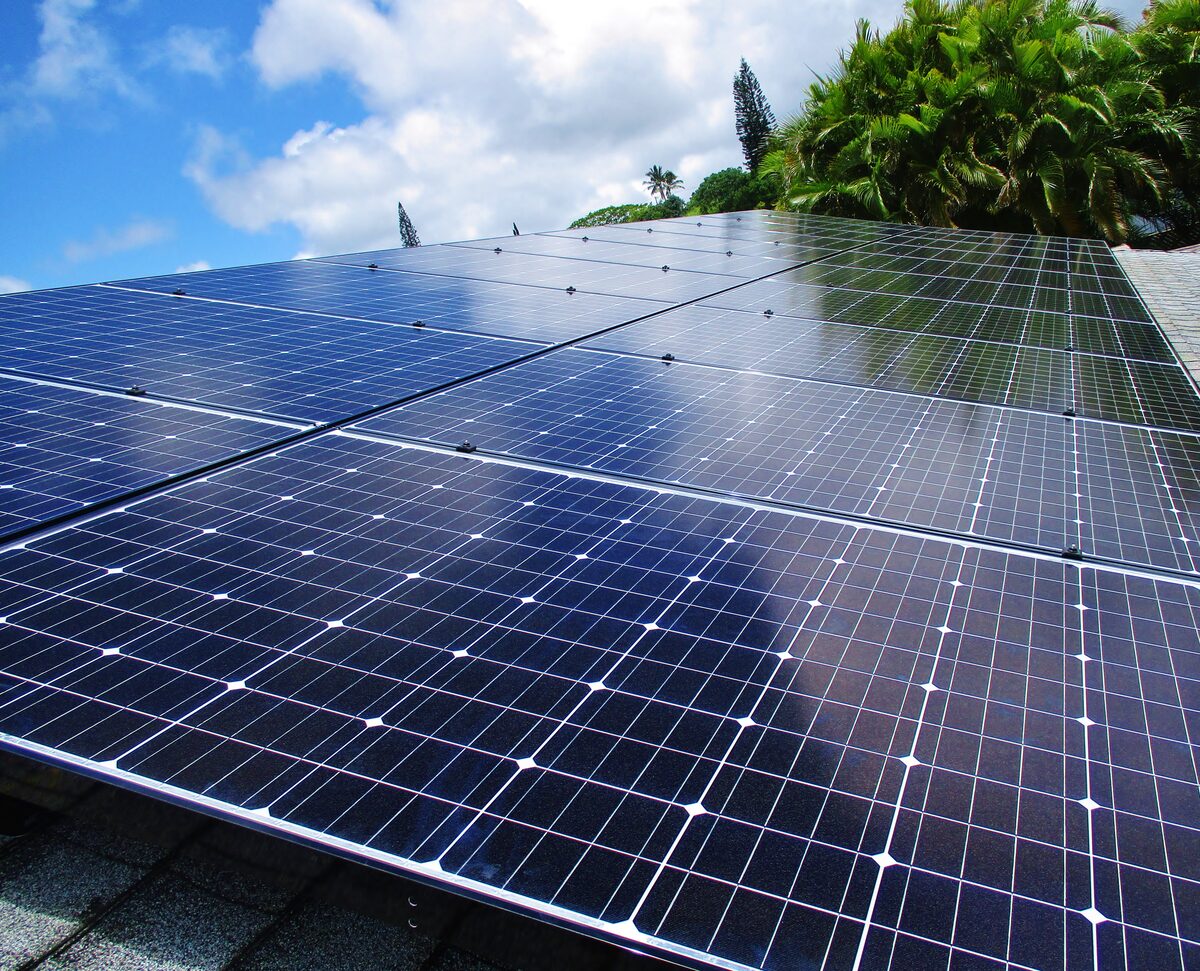
A family in Mililani signed a contract with us in February for a 12 kW solar PV system, a Tesla Powerwall 3, and a solar water heater. The total installed price was $48,200. After stacking every incentive available to them — federal, state, utility, and county — their net out-of-pocket cost came to $20,550. They did not have to be low-income. They did not need special approval. They just had to know what to apply for, and in what order.
That $27,250 gap between sticker price and actual cost is not a marketing number. It is the sum of six distinct incentive programs, each administered by a different agency, each with its own rules, deadlines, and quirks. Most Hawaii homeowners know about one or two of them. Almost nobody captures all six.
This guide walks through every incentive dollar available for a residential solar-plus-battery installation on Oahu in 2026, in the order they apply.
1. The Federal 30% Battery ITC — Still Alive, but Narrower Than It Used to Be
The federal residential solar Investment Tax Credit expired on December 31, 2025. Panels installed in 2026 get nothing from the IRS. That is the bad news, and there is no way to sugarcoat it — the 30% credit on solar panels that drove a decade of residential installations is gone for now.
The good news: standalone battery storage still qualifies. Under Section 25D of the Internal Revenue Code, residential battery energy storage systems with a capacity of 3 kWh or greater are eligible for a 30% tax credit through 2032.[1] The credit steps down to 26% in 2033 and 22% in 2034. A Tesla Powerwall 3 installed at $14,000 generates a $4,200 federal tax credit. Two Powerwalls at $26,000 total yield $7,800.
This is a nonrefundable credit, which matters. If your federal income tax liability for the year is $3,000 and your credit is $4,200, you zero out your tax bill but lose the remaining $1,200. Unlike the old solar ITC, Section 25D does allow you to carry the unused portion forward to the following tax year. For most dual-income Hawaii households with tax liabilities well above $4,200, the full credit gets absorbed in year one. Single filers or retirees on fixed income should plan ahead and may want to consult a tax preparer about timing.
One detail that gets missed: the battery does not need to be paired with new solar panels to qualify. If you installed solar three years ago and add a Powerwall now, the battery still gets the 30% credit. That is a significant opportunity for the thousands of Oahu homeowners sitting on solar-only systems from the NEM era.
2. Hawaii State 35% Tax Credit — $5,000 Per System for PV, $2,250 for Solar Water Heating
Hawaii's Renewable Energy Technologies Income Tax Credit, codified in HRS §235-12.5, covers 35% of the installed cost of a solar PV system, $5,000 per system.[2] For a solar water heating system, the cap is $2,250 per system. These are separate caps — a homeowner installing both PV and solar water heating can claim up to $7,250 or more in state credits.
Here is the detail that changes the math on larger installations: the $5,000 cap is per system, not per property. Under HRS §235-12.5, a "system" is typically defined in roughly 5 kW blocks. A 10 kW installation can be structured as two separate ~5 kW systems, each qualifying for its own $5,000 credit — that is $10,000 in state credits instead of $5,000. A 12 kW system could be structured as two systems with proportional credits totaling up to $10,000. This is standard practice among experienced Hawaii solar contractors, though homeowners should consult their tax advisor for their specific situation.
No income limit. No phase-out. No sunset date. The credit has been on the books since 1976 and the legislature has shown no appetite for removing it. Unlike the federal credit, the Hawaii credit is also nonrefundable against state income tax, but unused portions carry forward for up to five years under current DSIRE-documented policy. With the multi-system structure, the carryforward provision becomes more relevant — a $10,000 credit may take two tax years to fully absorb for some households. Hawaii's state income tax brackets push dual-income families into $6,000 or more of annual state liability quickly, but single-income filers and retirees should plan for a longer carryforward timeline.
The credit applies to the full installed cost before any federal credit reduction. You do not subtract the federal battery ITC first. Both credits are calculated on their respective gross costs independently. This is one of the few areas where the stacking math works entirely in the homeowner's favor.
3. HECO BYOD+ Upfront Payment — $400/kW, With a $400/kW LMI Adder
Hawaiian Electric's Bring Your Own Device Plus (BYOD+) program[3] is not a tax credit — it is a direct cash payment from the utility in exchange for the right to dispatch your battery during grid emergencies and peak demand periods. The payment is $400 per kilowatt of battery dispatch capacity, issued as a one-time upfront check after interconnection.
For a Tesla Powerwall 3 with 11.5 kW of continuous output, that is approximately $4,600. For two Powerwalls, roughly $9,200. The money arrives within 60 to 90 days of system activation and HECO program enrollment.
Households that qualify as low-to-moderate income under HECO's guidelines receive an additional $400 per kW adder, effectively doubling the payment to $800/kW. For one Powerwall 3, LMI qualification turns that $4,600 into $9,200. The LMI threshold is based on area median income for your county — on Oahu in 2026, a family of four earning under approximately $120,000 qualifies. That is not a low bar. Plenty of working families in Kapolei, Ewa Beach, and Waipahu clear it.
BYOD+ enrollment also provides monthly performance credits for five years based on how often HECO dispatches your battery. These credits are smaller — typically $15 to $30 per month — but they add up to $900 to $1,800 over the contract period. We do not include these in the upfront stacking math because they vary, but they further reduce the effective cost of the battery over time.
One recommendation we give every customer: enroll in BYOD+ even if you are skeptical about letting HECO touch your battery. The dispatch events are infrequent (typically 10 to 20 times per year), last only a few hours, and HECO is required to leave you with a minimum state of charge for backup purposes. The upfront payment alone justifies enrollment. Turning it down is leaving $4,600 or more on the table for no practical reason.
4. Hawaii Energy Rebates — Solar Water Heating, AC, and More
Hawaii Energy[4], the state's ratepayer-funded efficiency program, offers rebates on specific equipment categories. These are not tax credits. They are direct rebate checks or point-of-sale discounts applied by participating contractors.
The two that matter most for a solar-plus-battery project are the solar water heating rebate and the air conditioning rebate. Solar water heating systems installed by a participating Clean Energy Ally contractor on Oahu currently qualify for up to $2,750 instant rebate — recently increased to offset the loss of the federal residential solar credit. The AC rebate is $550 per outdoor condensing unit for qualifying high-efficiency mini-splits or central systems. Note: rebates are available to HECO, MECO, and HELCO ratepayers; Kauai (KIUC) is served by a separate cooperative and does not qualify.
Here is the urgency: Hawaii Energy's current program year runs through June 30, 2026, and the solar water heating rebate is funded from a fixed allocation. Once that money is gone, the rebate ends — regardless of the calendar date. In previous cycles, popular rebate categories have exhausted their funding two to three months before the program year ended. If you are planning a solar water heater installation, waiting until May or June is a gamble.
Hawaii Energy also offers smaller rebates on heat pump water heaters ($750), whole-home energy assessments, and smart thermostats. These are worth pursuing if they apply to your project, but the solar water heating rebate is the big one. It stacks on top of the state 35% tax credit ($2,250 cap for SWH), meaning a $7,000 solar water heater can be reduced by $2,250 in state credits plus up to $2,750 in Hawaii Energy rebates — knocking the net cost down to roughly $2,000.
5. Honolulu County 25-Year Property Tax Exemption
This is the incentive everyone forgets, partly because it requires zero paperwork. Under Honolulu Revised Ordinances Chapter 8[5], the assessed value of a solar energy system is excluded from your property's taxable value for 25 years from the date of installation. The exemption applies to both solar PV and solar water heating systems in Honolulu County (which covers all of Oahu).
What does that mean in dollars? A $48,000 solar-plus-battery system would, without the exemption, increase your property's assessed value and trigger higher property taxes. At Honolulu's current residential property tax rate of $3.50 per $1,000 of assessed value, that system would add approximately $168 per year in property taxes. Over 25 years, the exemption saves roughly $4,200. Not life-changing, but entirely free money that requires no application, no filing, no annual renewal.
The exemption is automatic because the City & County of Honolulu specifically excludes renewable energy improvements from assessed valuations. Your solar system adds real market value to your home — Zillow's research pegs the premium at roughly 4% — without increasing your tax bill. That is a rare combination.
6. Green Energy Money Saver — On-Bill Financing at 5.5% APR
This is not a rebate or credit, but it belongs in the stacking conversation because it solves the cash flow problem that prevents many households from capturing the incentives above. The Green Energy Money Saver (GEMS) program[6], administered through HECO, provides on-bill financing for solar and energy efficiency projects at a fixed 5.5% APR with terms up to 20 years.
The loan payment appears as a line item on your HECO bill. No separate lender, no separate monthly payment, no home equity requirement. The loan is tied to the meter, not the homeowner — if you sell the house, the loan obligation transfers to the new owner along with the solar system. Credit requirements are more relaxed than traditional solar loans because the utility's collection mechanism (your electric bill) reduces default risk.
For homeowners who cannot pay $48,000 upfront and wait for tax credits, GEMS bridges the gap. You install the system, enroll in GEMS, collect the BYOD+ upfront payment and Hawaii Energy rebates immediately, then apply the state and federal tax credits at filing time. Your net monthly GEMS payment — after the energy savings offset — is typically $40 to $80 less than your previous HECO bill. You start saving from month one.
The Full Stack: A Real Dollar Example
Here is how all six incentives applied to the Mililani family's project. Their system: 12 kW solar PV (26 REC 460W panels with Enphase IQ8 microinverters), one Tesla Powerwall 3, and a new solar water heater replacing a 15-year-old electric tank.
| Item | Amount | Running Total |
|---|---|---|
| Gross system cost (PV + Powerwall + SWH) | $48,200 | $48,200 |
| Federal 30% battery ITC ($14,000 × 30%) | −$4,200 | $44,000 |
| Hawaii 35% PV credit ($5,000/system × 2 systems)* | −$10,000 | $34,000 |
| Hawaii 35% SWH credit (capped at $2,250) | −$2,250 | $31,750 |
| HECO BYOD+ (11.5 kW × $400/kW) | −$4,600 | $27,150 |
| Hawaii Energy SWH instant rebate (up to) | −$2,750 | $24,400 |
| Hawaii Energy AC rebate (1 outdoor unit) | −$550 | $23,850 |
| 25-year property tax savings (present value) | −$3,300 | $20,550 |
*12 kW system structured as two ~6 kW systems under HRS §235-12.5, each qualifying for $5,000 in state credits. Consult your tax advisor. Property tax savings discounted at 3% to present value. Tax credits are nonrefundable; actual benefit depends on individual tax liability. BYOD+ monthly performance credits ($900–$1,800 over 5 years) not included.
From $48,200 to $20,550. That is a 57% reduction in effective cost, and this family did not qualify for the LMI adder. If they had, the BYOD+ payment would have doubled to $9,200, pushing the net cost below $17,000. Even with a single-system state credit of $5,000, the net cost would be $25,550 — still a 47% reduction.
The system offsets roughly $450/month in HECO charges. At a net cost of $20,550, the simple payback period is under four years. After payback, the family collects 20-plus years of essentially free electricity, free hot water, and battery backup during outages. The 25-year economic value of this system — counting avoided electricity costs, rate inflation, and the home value premium — exceeds $150,000.
The Order Matters: What Is Refundable vs. Nonrefundable
Not all of these incentives hit your bank account the same way. The BYOD+ upfront payment and Hawaii Energy rebates are cash. You receive them regardless of your income or tax situation. The federal battery ITC and Hawaii state credit are tax credits — they reduce taxes owed, dollar for dollar, but they are nonrefundable. If you owe less in tax than the credit amount, you do not get a refund check for the difference.
The federal battery ITC under Section 25D allows unused credit to carry forward. The Hawaii state credit allows carryforward for up to five years. So even if your tax liability is low in the installation year, you will eventually capture the full value — it just takes longer. For retirees living on Social Security and pension income with minimal tax liability, the carryforward timeline can stretch. In those cases, it sometimes makes sense to time the installation to coincide with a year of higher income — selling a property, taking a large IRA distribution, or having a working adult child claim the credit if the system is on their primary residence.
This is the kind of planning that most solar sales reps skip entirely. They quote the incentive stack as if everyone gets every dollar in year one. We think homeowners deserve the real math, even when it is more complicated.
Deadlines and Urgency
The federal battery ITC is stable through 2032. No rush there. The Hawaii state credit has no expiration. The Honolulu property tax exemption is permanent county policy. But two of the six incentives are time-sensitive.
Hawaii Energy's solar water heating rebate funding for the current program year runs through June 30, 2026, or until funds are exhausted — whichever comes first. Previous program years have seen popular categories run dry by April or May. If you want the up-to-$2,750 SWH instant rebate, commit now, not in June.
HECO's BYOD+ program has available capacity but is not unlimited. The program is structured around grid needs, and HECO periodically adjusts terms or pauses enrollment when capacity targets are met. The current $400/kW payment rate has been stable, but there is no contractual guarantee it stays at that level. Utility incentive programs in Hawaii have a history of being generous at launch and tightening over time as enrollment grows.
Common Questions
Do I need to apply for each incentive separately?
Yes, but a good contractor handles most of it. We file the HECO BYOD+ enrollment and Hawaii Energy rebate applications as part of our standard installation process. The federal and state tax credits are claimed on your annual tax return — we provide the documentation, but you (or your tax preparer) file the forms. The property tax exemption requires no action at all.
Can I stack these incentives if I already have solar?
Partially. If you have an existing solar PV system and want to add a battery, you can claim the federal 30% battery ITC, enroll in BYOD+, and benefit from the property tax exemption on the new equipment. You cannot re-claim the Hawaii state PV credit on panels that were already installed and credited. Adding a solar water heater to an existing PV system does qualify for both the state SWH credit ($2,250) and the Hawaii Energy rebate.
What if I lease my solar system instead of buying?
You get none of these incentives. Tax credits go to the system owner, which under a lease or PPA is the financing company. BYOD+ enrollment requires the homeowner to own the battery. Hawaii Energy rebates go to the property owner. This is one of many reasons we recommend purchasing over leasing for Hawaii homeowners who can qualify for financing. The financing calculator on our site shows the ownership vs. lease comparison in detail.
Is there an income limit for any of these programs?
No income limit for the federal battery ITC, the Hawaii state credit, the property tax exemption, or the base BYOD+ payment. The LMI adder on BYOD+ ($400/kW additional) requires income below the area median threshold. Hawaii Energy rebates have no income requirements. In short, these incentives are available to virtually every Oahu homeowner regardless of income.
Our Recommendation
If you are considering solar in 2026, install a solar-plus-battery system and add a solar water heater if your existing one is more than 10 years old. That combination captures the maximum incentive stack. Skipping the battery means losing the only remaining federal tax credit. Skipping the solar water heater means leaving $4,600 in combined state credit and Hawaii Energy rebates on the table — plus $100 to $150 per month in electric water heating costs.
The window for the full stack is open right now, but two of the six programs have finite funding or capacity. We have seen too many homeowners delay by three months and lose $2,000 to $5,000 in incentives that were available when they first called. Run the numbers through our solar calculator or financing calculator, and if the math works, lock in a contract before the Hawaii Energy SWH rebate pool runs dry.
The full incentives breakdown and financing options pages on our site cover each program in more detail. Or contact us directly for a free project estimate that shows your specific incentive stack, dollar for dollar.
Sources & References
- Residential Clean Energy Credit (Section 25D) — 30% ITC for standalone battery storage. Internal Revenue Service
- Hawaii Renewable Energy Technologies Income Tax Credit (HRS §235-12.5). Hawaii State Legislature
- BYOD+ battery incentive program — $400/kW upfront payment and LMI adder details. Hawaiian Electric
- Hawaii Energy rebate programs — solar water heating and AC rebate amounts. Hawaii Energy
- 25-year property tax exemption for renewable energy systems (ROH Chapter 8). City & County of Honolulu
- Green Energy Money $aver (GEMS) on-bill financing program at 5.5% APR. Hawaiian Electric