A few months ago, one of our techs drove out to a house in Ewa Beach where the homeowner swore his system was broken. Production had dropped 14 percent over the past year. He figured the inverter was failing. Our guy got on the roof, took one look, and called down: "When was the last time you cleaned these?" The answer was never. Four years of salt spray, red dirt, and mynah bird droppings had turned the panels into a science experiment. A two-hour cleaning brought production back to within 2 percent of day-one numbers.
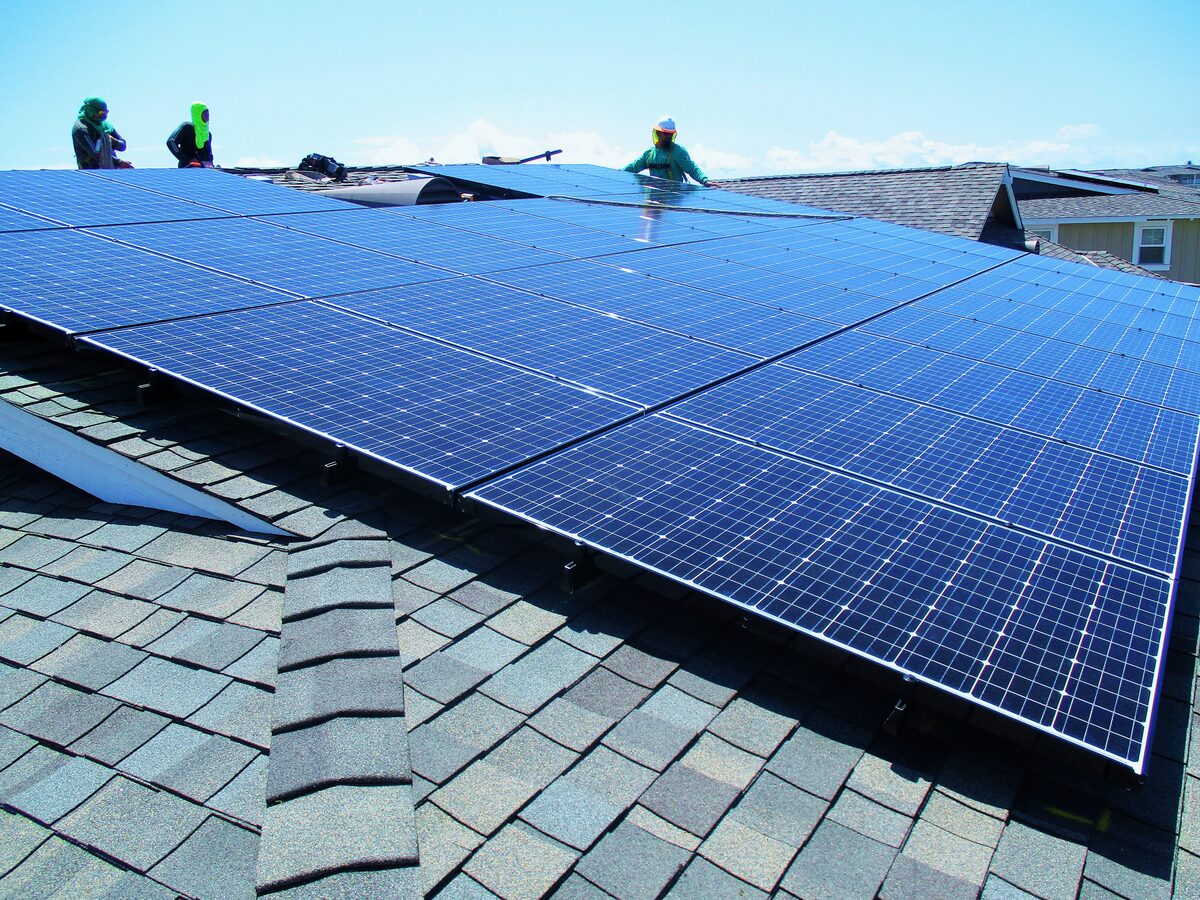
On the mainland, rain keeps panels reasonably clean. Hawaii is different. The things that land on your panels here — salt crystals, volcanic haze, laterite dust, tropical pollen, bird droppings — are stickier, more acidic, and more persistent than mainland grime. But cleaning them is straightforward if you do it right.
How Much Production Are Dirty Panels Costing You?
It depends on where you live and what is landing on your roof. Light soiling from regular rain at an inland location might cost you 2 to 5 percent. Moderate soiling at a coastal property with some dust runs 5 to 10 percent. Heavy buildup — bird droppings, caked red dirt, vog film — can take 10 to 15 percent or more.[1]
Run the math on a 10 kW system producing 15,000 kWh a year. A 10 percent loss means 1,500 kWh left on the table. At over $0.40 per kWh,[2] that is $600 a year sitting on your roof doing nothing. A professional cleaning costs $150 to $300 and recovers it immediately.
What Is Actually Landing on Your Panels
Salt Spray
If you live within a mile of the coast — and on Oahu, that covers a huge percentage of homes — airborne salt crystals deposit on your panels constantly. Salt does not just block light. It attracts moisture and creates a sticky film that traps additional dust and debris on top of it. Left alone, it compounds. Over enough time, it can etch the glass coating. Homes along the Kailua beachfront, the North Shore, and Lanikai are the worst cases, but anywhere in the coastal zone gets it. Figure 5 to 10 percent production loss, with cleaning needed every 3 to 4 months.
Red Dirt
Hawaii's red volcanic soil is extremely fine-grained. It gets into everything and it sticks. If you live near a construction site, an unpaved road, or agricultural land — common in Central Oahu and parts of the Big Island — your panels will develop a stubborn red film that rain alone will not touch. During dry, windy Kona weather, it gets worse. Production loss runs 5 to 12 percent.
Vog
When Kilauea is active, sulfur dioxide emissions create that hazy, throat-scratching air that drifts across the islands. It deposits a fine acidic film on panel surfaces. The Big Island, especially the Kona side, takes the worst of it, but Oahu gets vog too — particularly when the winds shift southerly. During heavy vog periods, you lose 3 to 8 percent of production both from the film on your panels and from the haze blocking direct sunlight.
Pollen and Organic Debris
Year-round growing season means year-round pollen. Ironwood needles, plumeria petals, kukui nut debris, mango tree sap — all of it ends up on your panels. Organic material that sits on cells causes hot spots that stress the cells underneath. If you have trees close to your array, expect 3 to 7 percent losses.
Bird Droppings
This one gets underestimated the most. A single bird dropping on a solar cell can cut that cell's output by 50 percent or more.[3] With string inverters, one heavily soiled panel drags down the entire string. Even with microinverters, droppings across multiple panels add up fast.
Mynah birds, pigeons, and doves are the usual suspects on Oahu. If they roost in a tree near your array, you can lose 5 to 15 percent of production from droppings alone. If it is chronic, ask about bird deterrent hardware — it pays for itself.
Cleaning Your Own Panels
If your panels are on a single-story roof that you can reach safely, you can do this yourself. Here is how our techs would tell you to do it.
Clean early morning or late afternoon. Never midday. Cold water hitting sun-baked panels causes thermal shock that can create micro-cracks.[4] Plus, wet panels on a hot roof are slippery. Check your Enphase monitoring first — if production has been dropping gradually on clear-sky days, soiling is almost certainly why.
All you need is a garden hose with a standard spray nozzle (not a jet nozzle), a soft-bristle brush on an extension pole if needed, and clean water. No soap. No chemicals. No Windex. No detergents. These leave residue that attracts more dirt and can damage panel coatings.
Start by rinsing from the top down to wash off loose debris. If you have stuck-on bird droppings or red dirt film, use the soft brush with water and light pressure. The glass is tough, but the anti-reflective coating scratches if you use anything abrasive.[5] Rinse thoroughly top to bottom. Let them air dry — towels leave lint and can scratch.
What will damage your panels: pressure washers (the number one cause of cleaning-related panel damage — cracks cells, blows out seals, forces water into junction boxes), abrasive pads or steel wool, and standing on the panels themselves. They are not designed to bear your weight. And if your roof is steep or your panels are on a second story, do not risk a fall for a few percent of production. Call someone.
When to Call a Professional
Second-story or steep-pitched roof. Large array that is time-consuming to reach. Stubborn staining that a garden hose will not touch. If your system is underperforming and you want cleaning combined with a full performance inspection, that is a good reason to bring in a pro too. Professional cleaning on Oahu typically runs $150 to $300 depending on array size and roof access. Many maintenance plans bundle cleaning into an annual service package.
Cleaning Schedules by Location
Coastal homes within a mile of shore — Kailua, the North Shore waterfront, Ewa Beach shoreline — need cleaning every 3 to 4 months. Homes right on the water may benefit from every 2 to 3 months. Salt spray never stops and it accumulates.
Inland homes in Mililani, Wahiawa, or upper Pearl City can usually go 6 to 12 months between cleanings. Less salt means rain does a better job on its own. The exception is homes near active construction or agricultural land — those need more frequent attention.
Leeward neighborhoods — Kapolei, Ewa, Waianae — get less rain, which means less natural rinsing. Combined with dustier, drier conditions, panels in leeward areas soil faster. Plan on every 4 to 6 months.
Let Your Monitoring Tell You
The most reliable way to know when your panels need cleaning is to watch your production data. With Enphase monitoring, you can see each panel's daily output.[6] A gradual, even decline across all panels on clear weather days is almost always soiling. A sudden drop on one or two panels is probably bird droppings or localized debris.
After cleaning, you should see an immediate jump. If you do not, the problem is equipment, not dirt — and that is when a professional maintenance inspection is the next step.
Just Get It on the Calendar
A $200 cleaning that recovers 10 percent of your production pays for itself in a few months. That is the whole argument. If it has been a year since your last cleaning — or if you have never had them cleaned — schedule it. You will see the difference in your next monitoring report and wonder why you waited so long.
Sources & References
- Photovoltaic soiling losses: a thorough review of research on the impact of dust, dirt, and biological soiling on PV performance. NREL Soiling Research
- Hawaiian Electric residential electricity rate schedules. Hawaiian Electric
- Impact of localized soiling and bird droppings on individual solar cell and module output. NREL
- Solar panel manufacturer cleaning and maintenance guidelines, including thermal shock risks. NREL Best Practices for PV System O&M
- Anti-reflective coating durability and care recommendations for crystalline silicon PV modules. NREL
- Enphase panel-level monitoring for soiling detection and production analysis. Enphase Energy