A few years back our crew pulled a 12-year-old array off a house in Lanikai — twenty panels, a name-brand string inverter, galvanized steel racking. On paper the system should have had another decade of life in it. In reality the mounting feet had corroded so badly that two rails were barely attached to the roof. The MC4 connectors had turned green inside their housings. Half the panel frames were pitted with white aluminum oxide. The homeowner had no idea any of this was happening because his monitoring app showed the system was “working.” It was — at about 64% of its original capacity. He thought that was just how solar performed. It is not.
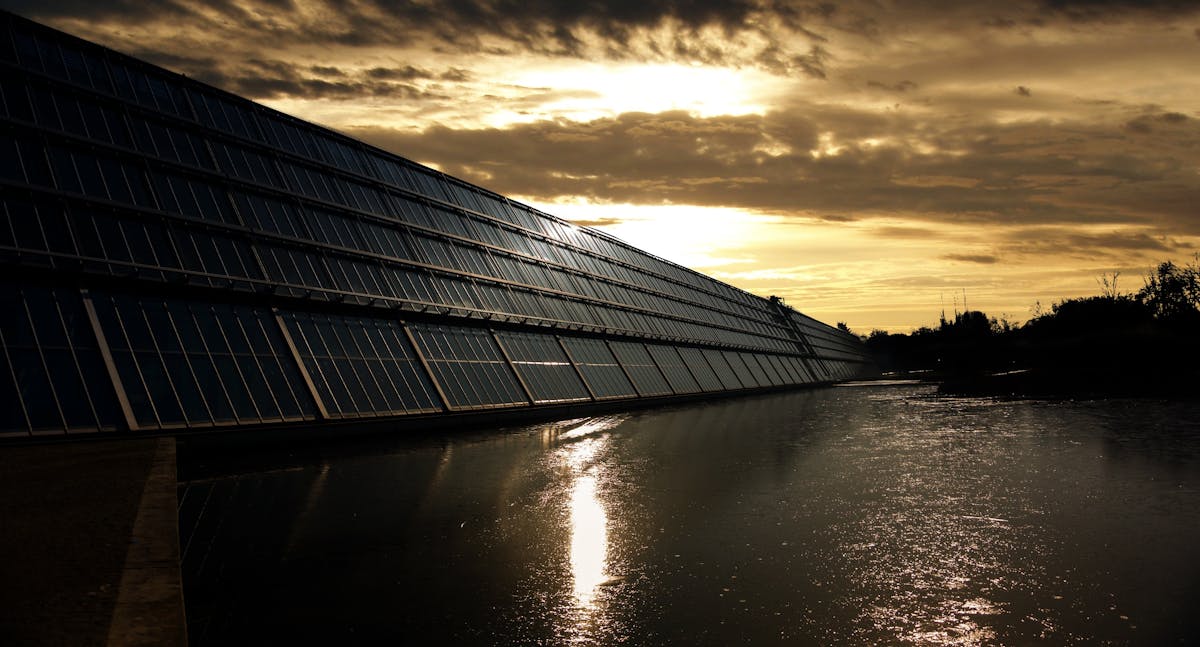
Hawaii does not treat solar equipment the way Arizona or California does. Our climate throws three simultaneous punches — salt-laden trade winds, persistent humidity around 70–80%, and UV radiation among the highest in the United States.[3] Each force attacks different parts of a solar system through different mechanisms. Equipment that performs fine in Sacramento will fall apart here in half its rated lifetime.
After 33 years and more than 10,000 installations across Oahu, we have strong opinions about what works. Most solar companies in Hawaii have not been around long enough to see what happens to their installations at year 15 or year 20. We have. Here is what we know.
The Triple Threat and How Each One Attacks Your System
Salt air is the most visible enemy. Oahu’s prevailing northeast trade winds pick up ocean spray and carry it inland, depositing sodium chloride on every exposed surface. Along the Windward Coast — Kailua, Kaneohe, Waimanalo — the salt concentration is aggressive enough to visibly corrode unprotected steel in months. But salt does more than rust metal. It is hygroscopic: it absorbs moisture from the air and creates a thin electrolytic film on surfaces that accelerates galvanic corrosion wherever two dissimilar metals touch.[1] That is exactly what happens at every mounting bolt, every grounding lug, every connector junction in a solar array.
Humidity is subtler but relentless. Oahu’s average relative humidity sits around 73%, and windward areas regularly exceed 85% overnight.[2] That moisture penetrates junction boxes, wicks into cable terminations, and condenses inside inverter housings during the cool-down cycle after sunset. We have opened junction boxes on 10-year-old panels that looked like they had been submerged — corrosion on every terminal, water staining on the potting compound. The panel glass was pristine. Everything behind it was failing.
UV exposure finishes the trifecta. Hawaii receives 5.0–5.5 peak sun hours per day — phenomenal for production, punishing on polymer components.[3] UV breaks down EVA encapsulant, causing yellowing and delamination. It embrittles cable jackets and destroys cheap plastic junction box housings. Everything organic on a solar array is in a slow-motion fight with ultraviolet radiation, and in Hawaii that fight is harder than almost anywhere else in the country.
What We Have Seen Fail in 33 Years
The failures follow patterns. Galvanized steel mounting hardware is the most consistent offender. Standard hot-dip galvanized racking — the kind that every budget installer uses because it saves $300–$500 per system — starts showing rust blooms within three to five years on homes in Ewa Beach and along the North Shore. By year 10, the lag bolts holding the rails to the roof have lost enough cross-section to compromise structural integrity. We replaced an entire racking system on a home in Hauula last year where the original installer had used galvanized Unistrut channel as a racking substitute. It looked like something pulled from a shipwreck.
Connector failures rank second. The “weatherproof” MC4 connectors that come with budget panels were designed for European climates, not for rooftops 300 feet from the surf in Punaluu. Cheap third-party connectors let moisture in through imperfect seals. Water inside a connector carrying 10–12 amps of DC current means resistive heating, arc faults, and eventually a fire hazard.[4] We install only genuine Staubli MC4 connectors. The price difference is about $2 per connection. The risk difference is enormous.
Panel degradation is the most expensive failure because you never notice it happening. Budget mono PERC panels degrade at 0.5–0.7% per year in Hawaii — faster than the mainland-tested warranty claims suggest.[5] At HECO’s $0.40–$0.43/kWh rates,[7] every extra tenth of a percent in annual degradation costs hundreds of dollars over a 25-year system life.
Why Panel Quality Matters More Here Than Anywhere Else
The IEC 61701 standard tests solar modules for salt mist resistance by exposing them to a controlled salt fog environment and measuring for corrosion, delamination, and performance loss.[1] The standard defines six severity levels. Most budget panels are tested to severity level 1 or 2. The panels we install are certified to severity level 6 — the maximum rating. That is not marketing differentiation. It is the difference between a panel designed for a rooftop in suburban Ohio and one designed for a rooftop 800 feet from the Pacific.
Temperature coefficient matters more in Hawaii than most installers admit. On a dark roof in Kapolei in August, cell temperatures routinely hit 65–70°C — that is 40–45°C above the standard 25°C test condition (STC) baseline. A budget PERC panel with a temperature coefficient of −0.34%/°C loses 13.6–15.3% of rated output at those temperatures. The REC Alpha Pure-RX at −0.26%/°C loses only 10.4–11.7%. On a 10 kW system, that gap means 300–400 fewer watts on hot afternoons — exactly when you need every watt for air conditioning.
Long-term tropical degradation compounds both problems. Heat, humidity, and UV accelerate every degradation mechanism simultaneously. A panel that degrades at 0.40%/year on the mainland may hit 0.55%/year in Hawaii.[5] Panels built with POE encapsulant instead of EVA resist this because POE does not absorb moisture or yellow under UV the way EVA does. The difference is invisible on day one. By year 15, it is the difference between a system still earning its keep and one quietly bleeding money.
REC Alpha Pure-RX 460W: Our Primary Choice
We did not arrive at REC by reading brochures. We arrived at REC by installing thousands of panels from a dozen different manufacturers over three decades and watching what happened to them. The REC Alpha Pure-RX 460W is our primary residential panel, and the reasons are specific.
HJT (heterojunction) cell technology sandwiches crystalline silicon between layers of amorphous silicon, eliminating light-induced degradation (LID) and holding annual loss to 0.25% or less.[6] At 22.1% module efficiency with a −0.26%/°C temperature coefficient, it produces more power per square foot in hot conditions than any PERC panel on the market.
More importantly for Hawaii, the Alpha Pure-RX is certified to IEC 61701 severity level 6 for salt mist resistance — the highest rating under the standard.[1] REC’s gapless cell layout uses conductive adhesive instead of solder, eliminating the micro-cracks and solder fatigue that salt air exploits in conventional panels. The junction box is sealed and potted. The anodized aluminum frame gets an enhanced corrosion treatment. And the 25-year output guarantee is 92% — the strongest in the residential solar industry.[6]
The cost premium over budget PERC panels is roughly $0.08–$0.12 per watt, adding $800–$1,200 to a typical system. That premium pays for itself within 6 to 8 years through higher production and lower degradation, then keeps paying you for the remaining 17 to 19 years. Installing a cheaper panel in Hawaii to save a thousand dollars is the worst trade in residential solar.
Hyundai T440NF TOPCon: The Strong Alternative
Not every system gets REC panels. For projects where budget constraints are real or the roof layout favors a different panel format, we install the Hyundai T440NF TOPCon. It is a legitimately good panel — not a consolation prize. TOPCon cell architecture delivers 25.0% cell efficiency through a tunnel oxide passivation layer that reduces carrier recombination at the rear surface.[8] Annual degradation runs roughly 0.35–0.40%, higher than HJT but still well below standard PERC.
Hyundai’s frames and junction boxes are well-sealed, and the panel carries IEC 61701 salt mist certification. It does not match REC’s severity level 6 tropical resilience, but it is a Tier 1 product from a manufacturer with deep pockets and a real warranty backstop. We have installed hundreds of them without early failures. For homeowners two or more miles inland — Mililani, upper Aiea, Wahiawa — the Hyundai saves money without the compromises of a budget panel.
Mounting Hardware: Where Cheap Gets Expensive Fast
The racking system holds your solar array to your roof through hurricanes, 60 mph trade wind gusts, and decades of thermal cycling. It is the last place to cut corners.
| Material | Coastal Lifespan | Cost Premium | Our Recommendation |
|---|---|---|---|
| Hot-dip galvanized steel | 5–12 years | Baseline | Never for coastal, marginal inland |
| Magnesium-rich galvanized (ZAM) | 15–25 years | +10–15% | Acceptable 2+ miles inland |
| Marine-grade aluminum (6005-T5) | 30–50 years | +20–30% | Our standard for all installs |
| 304 stainless steel fasteners | 40–60 years | +25–35% | Required for all bolted connections |
We use marine-grade aluminum racking (6005-T5 alloy) with 304 stainless steel fasteners on every installation, coastal or inland. The cost difference over galvanized runs roughly $400–$700 per system. Replacing a corroded racking system at year 10 costs $3,000–$5,000 including labor to remove and reinstall panels. The math is not complicated.
Hurricane rating matters too. Hawaii building code requires 130 mph wind load resistance; our systems are engineered for 150 mph. When Hurricane Lane sent 60+ mph gusts across Oahu in 2018, we did not lose a single array. Some competitors did. The difference came down to hardware quality and installation discipline — correct lag bolt embedment depth, proper rail splice torque, and enough attachment points to distribute uplift loads evenly across the roof structure.
Inverters and Electronics: Humidity’s Quiet Kill
We install Enphase IQ8 microinverters on residential systems. Each panel gets its own inverter mounted directly beneath it on the racking rail, which means every unit sits in an environment of high heat, high humidity, and salt exposure for 25 years.
The IQ8 survives because Enphase potted the entire circuit board in epoxy and sealed the housing to NEMA 6 standards — the same rating used for equipment that may be temporarily submerged.[4] Earlier-generation microinverters from competing manufacturers used ventilated housings that let humid salt air reach the circuit board directly. We saw failure rates above 8% within seven years on those units in coastal installations. The Enphase IQ series failure rate across our install base is under 1%.
String inverters have their own humidity problems. Even mounted on a shaded garage wall, Hawaii’s ambient humidity causes condensation inside the enclosure during overnight cool-down. We stopped installing budget string inverters after replacing too many at year six and seven — right after the manufacturer warranty expired, naturally. The per-panel monitoring that Enphase provides is a separate advantage: production drops from a failing connector or a dirty panel show up immediately rather than going unnoticed for months.
Battery Storage: Heat Management Is the Whole Game
The Tesla Powerwall 3 is our primary battery product — 13.5 kWh of usable storage with 11.5 kW continuous output. It is a proven unit with strong software integration and reliable field performance. But lithium-ion chemistry and sustained heat are not friends, and Hawaii’s ambient temperatures demand thoughtful installation planning.
Tesla rates the Powerwall for operation up to 50°C (122°F). A west-facing exterior wall in Hawaii Kai, baking in afternoon sun, can push the battery’s thermal management system into throttling mode — reducing charge and discharge rates exactly when you need them most during a grid outage or peak time-of-use pricing.
We install Powerwalls on north-facing walls or in shaded locations whenever possible. Garages work well if ventilated. Proper clearances on all sides are not just for code compliance — restricted airflow raises operating temperature and shortens cycle life. The same Powerwall on a shaded north wall versus a sun-baked west wall will deliver measurably different performance over its lifetime.
Maintenance: Salt Does Not Take Days Off
On homes in Kailua and along Kam Highway near Kaneohe Bay, we measure 3–5% production loss from salt soiling alone within three months of the last cleaning. Strong trades make it worse. Even two miles inland — upper Manoa, Pacific Palisades — salt buildup on panel glass is never zero on Oahu.
We recommend professional cleaning twice per year for coastal homes and annually for inland systems. But what matters more is the inspection that comes with it — checking connectors for discoloration, examining frames for corrosion pitting, verifying mounting hardware torque, and reviewing monitoring data against expected output. Catching a corroding connector at year five is a $150 service call. Missing it until year 10 can mean a failed panel, an arc fault, or a full racking replacement.
The False Economy of Cheap Equipment
A homeowner gets three quotes. Two propose quality equipment. The third is $2,000 cheaper — budget PERC panels, galvanized racking, a no-name string inverter. The homeowner picks the cheap one because the salesperson promises the same production and the same 25-year warranty.
By year 8, the racking is corroding and the inverter needs replacement at $2,500. By year 12, the panels have degraded past warranty thresholds, but the installer is out of business and the warranty is worthless. By year 15, a full system overhaul costs more than the original installation. The $2,000 saved on day one has cost $10,000 or more in premature failure and lost production.
We have been in business since 1993. We have watched dozens of solar companies come and go in Hawaii — some after only two or three years. The ones that last install equipment that lasts. When we choose a panel or an inverter, we are choosing something we will maintain and stand behind for decades. That long-term accountability changes which products look like a good deal. The cheapest line item on the quote is almost never the cheapest option over 25 years. Not in Hawaii.
Sources & References
- IEC 61701:2020, Salt mist corrosion testing of photovoltaic modules — test standard and severity levels. IEC
- Kempe, M.D., “Modeling of rates of moisture ingress into photovoltaic modules,” Solar Energy Materials & Solar Cells, NREL, 2006. NREL
- NREL, Solar Resource Data and Maps — Hawaii annual GHI and peak sun hour data. NREL Solar Maps
- Enphase Energy, IQ8 Microinverter technical specifications and environmental ratings. Enphase
- Jordan, D.C. & Kurtz, S.R., “Photovoltaic Degradation Rates — An Analytical Review,” NREL, 2012. NREL
- REC Alpha Pure-RX Series product specifications and 25-year performance warranty. REC Group
- Hawaiian Electric residential rate schedules, Oahu average ~$0.40–$0.43/kWh. Hawaiian Electric
- Hyundai Energy Solutions, T440NF TOPCon module specifications — 25.0% cell efficiency. Hyundai Energy