We once got called to fix a system where the previous installer had used undersized wire on an array that was too large for it. The homeowner did not discover the problem from the monitoring app. He discovered it from the smell of overheating insulation. The company that sold the system had already left Hawaii.
That is the part most homeowners miss. Solar is not just a set of panels on a roof. It is roof work, electrical work, utility paperwork, permitting, monitoring, warranties, and service over a 25-year life. On Oahu, where a residential system usually runs $30,000 to $50,000 before financing costs, the gap between a serious contractor and a slick sales operation is enormous.
These are the questions that separate the two.
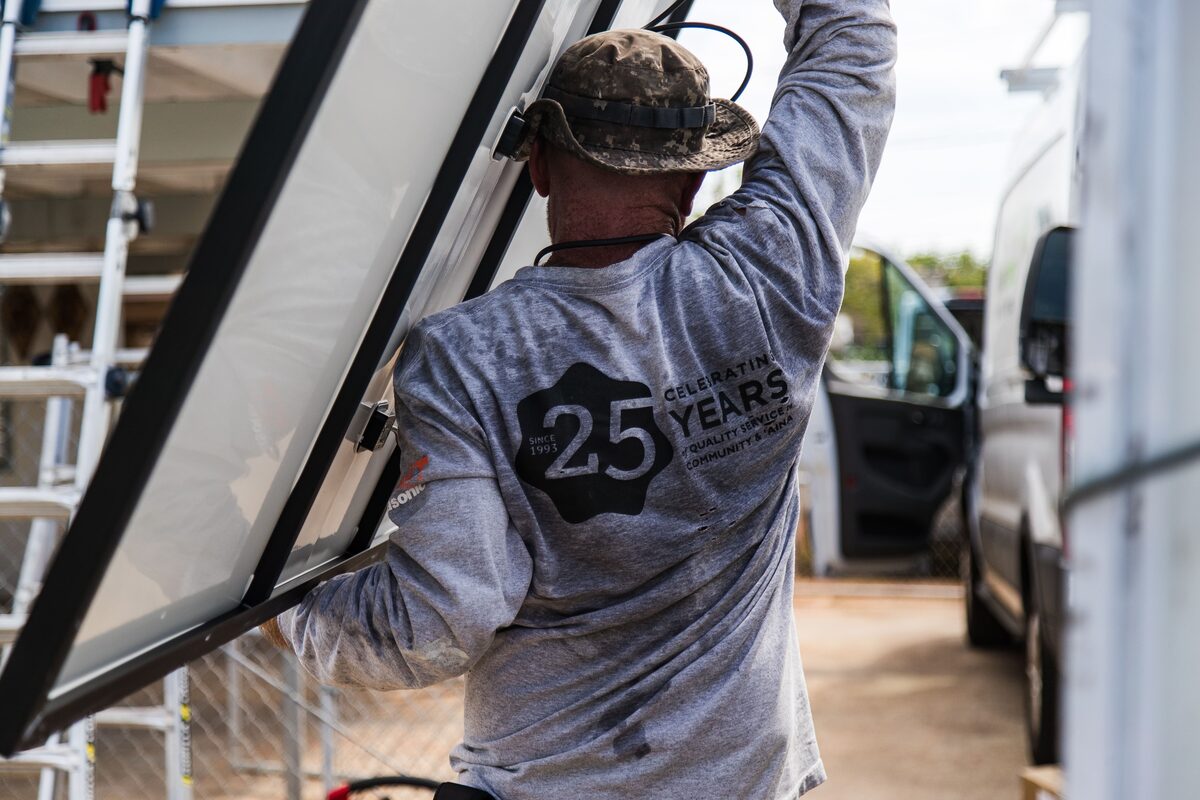
The Fast Screen Before You Get Into the Details
If you do not want to sit through a one-hour sales pitch before figuring out whether a company is credible, ask these four questions first.
| Question | Good Answer | Bad Answer |
|---|---|---|
| What is your Hawaii contractor license number? | A specific number you can verify immediately | Deflection, delay, or no number at all |
| Who does the installation? | Named in-house crews or clearly identified subs | Vague talk about a "partner network" |
| What exact equipment are you installing? | Panel, inverter, battery, and racking model numbers | Brand names only or "or equivalent" |
| Who services the system in year 8? | A local service process with real response expectations | "The manufacturer handles that" |
If a company gets shaky on any of these four, do not waste much more time. The rest of the conversation usually does not improve.
The Questions That Actually Matter
1. What is your Hawaii contractor license number?
Do not sign a contract without seeing a license number. Hawaii law requires a C-60 (Solar Energy Systems Contractor) or equivalent specialty license.[1] Ask for the number and verify it yourself on the Hawaii DCCA Professional and Vocational Licensing website. Takes two minutes.
A legitimate installer hands over the number without blinking. Ours is C-26041, with additional specialty classifications: C-13 (Electrical), C-52 (Building), and C-42 (Plumbing and Solar Hot Water). Licensed since 1993.
2. Who actually does the installation?
A lot of solar companies in Hawaii are sales operations. They sell you the system, then subcontract the actual roof work to whoever is available that week. When something goes wrong — and it eventually will on a 25-year asset — the sales company points at the subcontractor. The subcontractor points back. You are stuck in the middle.
Ask whether they use in-house crews or subs. Ask how long those crews have been with the company. Ask who pulls the permit, who handles the electrical work, and who shows up if there is a roof leak six months later. The answer tells you almost everything about accountability.
3. What exact equipment goes on my roof?
Get model numbers, not brand names. "SunPower panels" or "Tier 1 panels" is meaningless. You need to know the panel manufacturer, model, and wattage (for example, REC Alpha Pure-R 460W). The inverter type and model (Enphase IQ8A microinverters). The battery brand and model if included (Tesla Powerwall 3). The racking system manufacturer. The monitoring platform.
If the contract says "or equivalent" anywhere, stop.[2] That clause gives the installer permission to swap in cheaper equipment after you sign. Every component should be specified. No exceptions.
4. What are the warranty terms, and who actually services them?
Solar warranties stack in layers. Panel product warranties cover manufacturing defects — typically 25 years for premium panels. Performance warranties guarantee minimum output at year 25 (92% for HJT panels, 84 to 88% for standard). Enphase microinverters carry 25-year warranties. Most string inverters cover 12 to 15 years. Then there is the workmanship warranty, which covers installation quality, and the roof penetration warranty for leaks from mounting hardware.
Here is the question that really matters: who comes out to your house when something breaks in year 8? Manufacturer warranties still exist if your installer disappears, but that does not mean free labor, fast service, or easy claims. It usually means you are paying another contractor to diagnose, remove, document, ship, reinstall, and argue with the manufacturer. A company that has been around for decades is simply more likely to still be around when you need them.
5. How many HECO interconnections have you completed?
Installing panels on a roof is maybe half the job. Getting your system approved, interconnected, and producing under the right HECO tariff — SRE, BYOD+, or legacy programs[5] — requires navigating an application and inspection process that trips up inexperienced contractors constantly. A mistake in the interconnection paperwork can leave your system sitting idle for months while panels bake uselessly in the sun.
Ask how many systems they interconnected with HECO in the past year. Ask what their typical timeline is from contract to activation. Ask whether they handle the entire HECO application or just part of it. Vague answers here are a red flag.
6. What is the real timeline?
A typical residential solar installation on Oahu takes 8 to 16 weeks from signing to activation. Here is why:
- Design and engineering: 1 to 2 weeks
- Permitting: 2 to 4 weeks
- Installation: 1 to 3 days
- City inspection: 1 to 2 weeks
- HECO interconnection approval: 2 to 6 weeks
Anyone promising activation in "2 to 3 weeks" is either lying or does not understand the process. Permitting alone takes longer than that.
7. What does this actually cost over 25 years?
Cash purchases give you the lowest total cost and best return. Solar loans let you own the system while making monthly payments, but interest rates and terms vary wildly — ask for the total cost including all interest, not the monthly payment. Leases and PPAs mean a financing company owns the system on your roof, you pay a monthly fee that typically escalates every year, and the arrangement complicates home sales while often costing more over 25 years than buying outright.
Some installers make higher commissions on certain financing products. That is the part they do not volunteer. Do not let someone else’s incentive structure choose your payment method. Compare the total 25-year cost of every option on paper before signing anything, including dealer fees, escalators, and balloon payments if they exist.
8. How do I know my system is working?
You should have real-time access to your production data from day one. With Enphase microinverters, you get panel-level monitoring through the Enlighten app at no extra cost — you can see each individual panel's output on your phone. String inverter systems usually only show total system production, so if one panel dies, you might not notice for months. Ask whether monitoring is included, whether the company watches for problems proactively, and whether there is a mobile app.
9. What happens when I need service in five years?
Solar systems need periodic maintenance — cleaning, electrical checks, hardware inspection. Ask whether the installer offers maintenance plans and what those plans include. More importantly, ask about service response time. When something goes wrong at year 8, how fast can they get a technician to your house? A company that plans to be around long-term will have a clear answer.
10. Can I talk to your recent customers?
Any installer worth hiring will provide references without hesitating. Ask for customers in your area with similar roof types and system sizes, people who have had the system at least a year so they can speak to the post-install experience, and check their Google, Yelp, and BBB reviews yourself.[3] If they dodge this question, you have your answer.
How to Compare Quotes Without Getting Lost
Most homeowners make one mistake here: they treat the proposal with the lowest monthly payment as the best deal. It usually is not.
Compare quotes on the things that actually stay true after the salesperson leaves: total system size in kW, annual production estimate, panel and inverter model numbers, workmanship warranty length, financing structure, and total cost over the life of the agreement. Put those on one sheet side by side. If one company will not give you enough detail to make that comparison, eliminate them.
We have seen homeowners in Ewa Beach and Mililani choose the cheapest quote, then call us later because the system was undersized, the equipment changed after signing, or nobody would answer the phone once the install was complete. Cheap is easy to sell. It is expensive to own.
The Red Flags We Have Seen in 30 Years
We have had homeowners come to us after bad experiences with other companies more times than we can count. The patterns repeat.
Large national solar companies enter the Hawaii market, install aggressively for a year or two, then leave when they discover that island logistics are hard and margins are thin. Their warranty promises leave with them. Before signing with any company, ask whether they have a permanent Hawaii office with full-time local staff. If the answer involves a mainland headquarters and a local "sales team," be cautious.
Door-to-door sales are the clearest warning sign in the industry. If someone shows up at your house uninvited with a "limited time offer," they are counting on you not comparison shopping. High-pressure, sign-today tactics exist for one reason: the deal does not look as good once you have time to think about it. Walk away.
No visible license number is a deal-breaker. Hawaii law requires contractors to put their license number on all advertising, contracts, and business cards.[1] If you cannot find one, do not go looking for it — just find a different company.
Suspiciously low pricing always has an explanation, and the explanation is never good. Quality solar equipment has a cost floor. If one quote comes in 30 to 40% below the others, the difference is coming from somewhere: cheaper panels with faster degradation, string inverters instead of microinverters, racking that will not survive Hawaii wind loads, skipped engineering, or unlicensed labor.
Vague contracts kill you slowly. If the contract does not name exact equipment models, includes "or equivalent" substitution clauses, or has fuzzy warranty language, do not sign it. Everything promised verbally needs to be in writing. Every single thing.
Finally, a company with no physical office is a company that can disappear overnight. Visit their location if you can. See their equipment. Meet the people who will be on your roof. If the business feels temporary, treat that feeling as useful information.
What a License Actually Means
A Hawaii contractor license is not a piece of paper you hang on the wall. It means the company passed competency examinations, carries required liability insurance and workers comp, has posted a surety bond that protects you financially, and has been vetted by the DCCA for business history and financial responsibility.[4] It also means you have legal recourse through the Contractors License Board if things go wrong. Without a license, none of those protections exist, and your homeowner's insurance may not cover damage from the installation.
We hold license C-26041 with specialty classifications in Electrical (C-13), Building (C-52), and Plumbing (C-42). Continuously licensed since 1993, through recessions, policy overhauls, and every industry shift along the way. We will still be here when your system needs attention in year 5, year 15, and year 25.
Trust the Feeling in Your Gut
If the salesperson dodges your questions, pressures you to sign today, or cannot give a straight answer about their license, trust that instinct. A company that expects to be servicing your system in 15 years welcomes hard questions. A company trying to lock you in before you compare quotes does not.
We will hand you our license number, name every component going on your roof, lay out the realistic timeline, and give you references you can actually call. That is not a sales strategy. It is how we have run this business since 1993.
Sources & References
- Hawaii DCCA Professional and Vocational Licensing — contractor license verification and requirements. Hawaii DCCA
- SEIA consumer guide to solar contracts and equipment specification best practices. SEIA
- Better Business Bureau — business reviews and complaint history for solar contractors. BBB
- Hawaii DCCA Contractors License Board — licensing requirements including bonding, insurance, and examinations. Hawaii DCCA
- Hawaiian Electric customer renewable programs — SRE, BYOD+, and interconnection application process. Hawaiian Electric
- NABCEP certification — North American Board of Certified Energy Practitioners, the industry standard for solar installer competency. NABCEP