$14,000 installed. That is the number most Oahu homeowners land on for a single Tesla Powerwall 3 — before incentives knock it nearly in half. In a state where the federal residential solar ITC expired three months ago, the battery tax credit is now the last significant piece of federal money on the table for home energy. It is reshaping how people buy solar in Hawaii, and it is reshaping it fast.
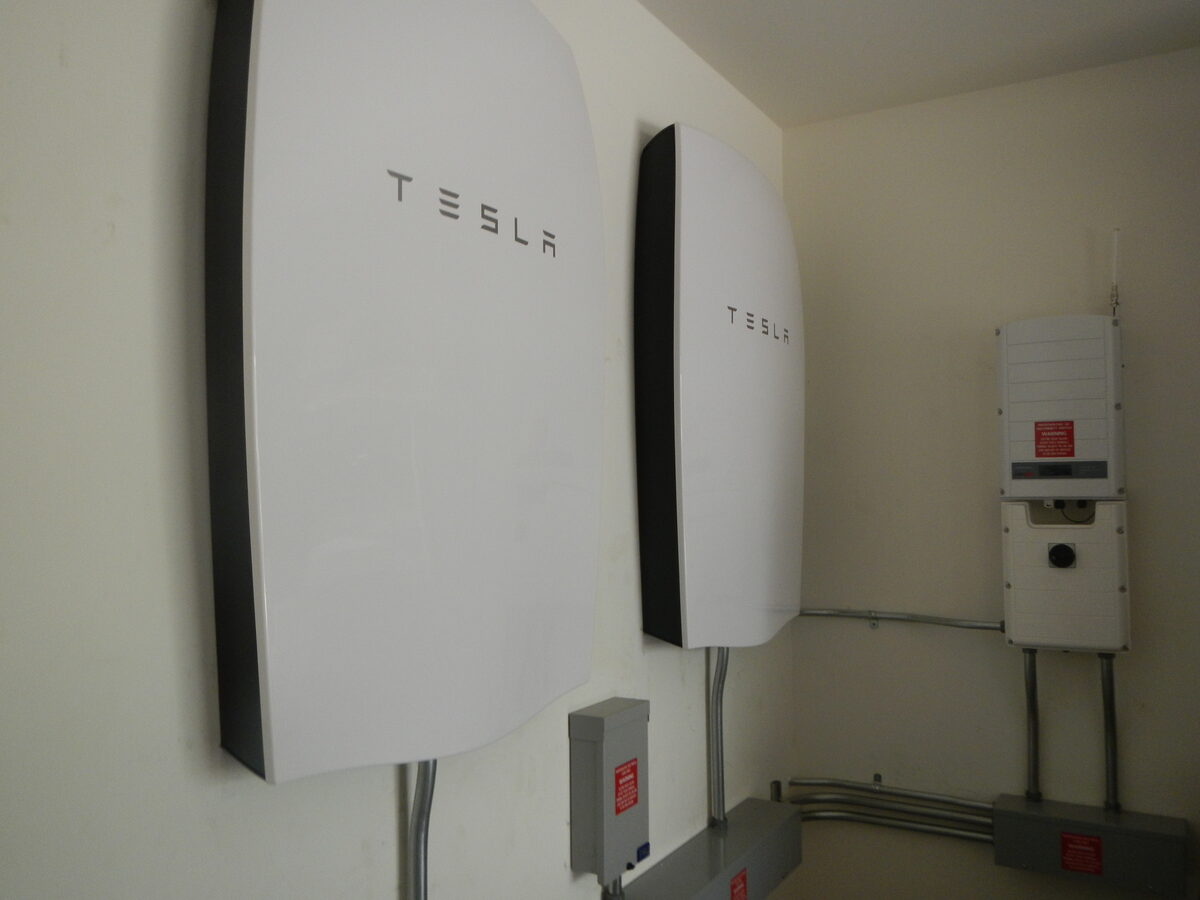
Here is what the Powerwall 3 actually costs in different configurations, what incentives apply, and — the part most websites skip — when you will actually earn that money back.
What a Single Powerwall 3 Costs Installed
Tesla lists the Powerwall 3 at $9,200 for the unit itself.[1] That is the sticker price, not your price. Installation in Hawaii adds $2,800 to $6,800 depending on three things: the condition of your electrical panel, whether your home already has solar, and how far the battery sits from the main panel. A straightforward installation on a home with a modern 200-amp panel and existing solar runs around $12,000 total. A complex retrofit on an older Kailua home with a 100-amp panel that needs an upgrade, a subpanel add, and conduit run through a detached garage pushes closer to $16,000.
The realistic range for most Oahu installations is $12,000 to $16,000 before incentives.
That range is wider than what you will see on Tesla's website, and there is a reason. Tesla quotes a mainland-friendly number. Hawaii labor costs run 20–30% above national averages, shipping adds to material costs, and the permitting process through the City & County of Honolulu is not fast or cheap. Any installer quoting you under $11,000 for a fully permitted, code-compliant Powerwall 3 installation on Oahu is either cutting corners or losing money — and neither of those should make you feel comfortable.
Expansion Packs and Multi-Unit Configurations
The Powerwall 3 stores 13.5 kWh of usable energy and delivers 11.5 kW of continuous power.[1] For a modest two-bedroom home in Mililani running a couple of mini-splits and a refrigerator, one unit handles an overnight outage without breaking a sweat. For a larger home in Hawaii Kai with central AC, an electric vehicle charger, and a family of five, one Powerwall barely gets you through a single evening during a grid outage.
Tesla sells expansion packs — additional Powerwall 3 units that stack onto your first — at $5,900 to $6,000 per unit before installation. Installation cost on expansion packs runs lower than the first unit because the electrical infrastructure is already in place. Expect $1,500 to $2,500 per expansion pack for labor, bringing the installed cost of a second Powerwall to roughly $7,500 to $8,500.
| Configuration | Total Storage | Continuous Power | Installed Cost (Pre-Incentive) |
|---|---|---|---|
| 1 Powerwall 3 | 13.5 kWh | 11.5 kW | $12,000–$16,000 |
| 2 Powerwalls (1 + expansion) | 27 kWh | 23 kW | $19,500–$24,500 |
| 3 Powerwalls (1 + 2 expansions) | 40.5 kWh | 34.5 kW | $27,000–$33,000 |
Pricing based on Oahu installations as of Q1 2026. Actual cost varies by electrical panel condition, distance from panel to battery, and permitting requirements.
Three Powerwalls is the practical maximum for most residential installations. Beyond that, you are running into panel capacity limits and diminishing returns on the investment.
How Incentives Cut the Real Cost Nearly in Half
This is where the Powerwall math gets interesting — and where Hawaii homeowners have a structural advantage over the rest of the country.
The 30% federal Investment Tax Credit still applies to standalone battery storage systems of 3 kWh or greater, and it runs through 2032.[2] On a $14,000 Powerwall installation, that is $4,200 back as a dollar-for-dollar credit on your federal income tax. On a two-unit system at $22,000, the credit is $6,600. This is the same 30% ITC that used to apply to solar panels — Congress stripped it from residential solar at the end of 2025 but left it intact for batteries. If you are adding solar and storage together, only the battery portion qualifies for the federal credit now. The solar qualifies for the 35% Hawaii state credit ($5,000 per system under HRS §235-12.5, with larger installations potentially structured as multiple ~5 kW systems for higher total credits) but not federal.[6]
Then there is HECO's Battery Bonus / BYOD+ program. This one is real money. HECO pays $400 per kilowatt of dispatch capacity when you enroll your battery.[3] The Powerwall 3 delivers 11.5 kW of continuous power, which means an upfront payment of approximately $4,600 per unit. Two Powerwalls: $9,200. HECO deposits this directly — it is not a bill credit, not a rebate you wait six months for, not a tax form. It is a check. In exchange, HECO can dispatch your battery during grid emergencies and peak demand events, typically the 5–9 PM window when Oahu's grid is most stressed.
Stack those two incentives on a single Powerwall and the math looks like this:
| Line Item | 1 Powerwall | 2 Powerwalls |
|---|---|---|
| Installed cost | $14,000 | $22,000 |
| 30% federal ITC | −$4,200 | −$6,600 |
| BYOD+ upfront ($400/kW) | −$4,600 | −$9,200 |
| Net out-of-pocket | $5,200 | $6,200 |
$5,200 net for 13.5 kWh of battery storage with backup power, peak rate arbitrage, and grid services income. $6,200 for double the capacity. The second Powerwall is effectively $1,000 more than the first after incentives, which is why we tell nearly every customer who is considering one Powerwall to seriously price out two.
LMI-qualifying households (income at or below 80% of area median) get an additional $400/kW through BYOD+, which brings the HECO payment to $800/kW — roughly $9,200 for a single Powerwall. At that level, the net cost after incentives drops below $1,000. We have installed systems in Waianae and Nanakuli where the homeowner's out-of-pocket cost for a Powerwall was effectively zero after stacking LMI BYOD+ with the federal ITC.
Retrofit vs. New Install: The Price Gap Is Real
Adding a Powerwall to an existing solar system costs more than installing battery and solar together as a single project. On a new solar+storage installation, the electricians are already on-site, the permits are bundled, and the system design accounts for the battery from day one. Typical premium for a retrofit versus new install: $1,500 to $3,000.
The biggest cost driver in retrofits is the electrical panel. Homes that went solar five or six years ago often have 100-amp or 150-amp panels that were adequate for a grid-tied PV system but do not have the capacity for a battery. A panel upgrade to 200 amps runs $2,000 to $3,500 in Honolulu, and that cost gets folded into the battery installation. If your home already has a 200-amp main panel, the retrofit is straightforward. If not, budget for the upgrade.
One of our customers in Ewa Beach learned this the hard way. She had a 7 kW solar system installed in 2021 by another company, with a 125-amp panel that was already near capacity. When she called us about adding a Powerwall, the panel upgrade alone added $2,800 to the project. The total came to $16,500 installed. After the ITC and BYOD+, her net cost was $7,700 — still a good investment, but she wishes she had done solar and battery together from the start. That is advice we give every new solar customer now: even if you do not want a battery today, make sure your installer sizes the panel for one.
Powerwall 3 vs. Enphase IQ Battery 5P
The Powerwall is not the only option, and for some homes it is not the best one. The Enphase IQ Battery 5P[4] has become a serious competitor in the Hawaii market, particularly for homes already running Enphase microinverters.
The IQ Battery 5P stores 5 kWh per unit and delivers 3.84 kW of continuous power. Enphase's design is modular — you stack multiple units to reach your target capacity. Three IQ Battery 5P units give you 15 kWh and 11.5 kW, roughly matching a single Powerwall 3. Installed cost for a 3-unit Enphase configuration runs $13,500 to $17,000 on Oahu, putting it in the same ballpark as a Powerwall.
The trade-offs come down to integration and scalability. If your home already has Enphase microinverters, the IQ Battery communicates natively with your existing system — one app, one monitoring platform, one support call if something goes wrong. The Powerwall 3 has its own integrated inverter and works with any solar setup, but it means running two separate monitoring systems if you have Enphase on the roof.
Our take: for new installations, we slightly prefer the Powerwall 3 for its raw power output and lower per-kWh cost at scale. For retrofits on existing Enphase systems, the IQ Battery 5P often makes more practical sense. Both qualify for the same 30% federal ITC and BYOD+ incentives. The choice should come down to your existing equipment and your installer's experience with each platform — not brand loyalty.
The Real Payback Calculation
Payback math on batteries is different from solar payback math, because a battery does not generate electricity. It shifts when you use or export electricity that your panels already produced. The value comes from three streams: peak rate arbitrage, backup power, and BYOD+ grid services.
Peak rate arbitrage is the big one. Under HECO's current rate structure, solar energy exported during the midday window (9 AM–5 PM) earns you roughly $0.135/kWh on most residential programs.[5] That same energy, stored in a Powerwall and exported during the 5–9 PM peak window, earns $0.329/kWh. The spread is $0.194 per kWh. A single Powerwall cycling 13.5 kWh daily captures about $2.62 in additional value per day, or roughly $957 per year. In practice, you will not cycle the full capacity every single day — some days you will hold reserves for backup, some days cloud cover reduces production — so a realistic annual figure is $750 to $850.
BYOD+ adds ongoing value beyond the upfront payment. Enrolled batteries receive monthly performance credits for dispatched energy, typically $15 to $25 per month per Powerwall over the five-year enrollment term. That is another $900 to $1,500 over the contract period.
Put it together for a single Powerwall at $14,000 installed:
| Value Stream | Year 1 | Years 1–5 Total |
|---|---|---|
| Federal ITC (30%) | $4,200 | $4,200 |
| BYOD+ upfront payment | $4,600 | $4,600 |
| Peak rate arbitrage | $800 | $4,000 |
| BYOD+ monthly credits | $240 | $1,200 |
| Total value recovered | $9,840 | $14,000 |
Full payback in roughly five years. After that, the peak rate arbitrage alone generates $800+ per year for the remaining 10–15 years of the battery's warranty life. That is $8,000 to $12,000 in net profit over the system's lifetime, plus backup power that you never had to use the dollar value of a generator and fuel to calculate.
Compare that to a savings account. $14,000 in a high-yield savings account at 4.5% APY earns about $630 per year. The Powerwall, after the five-year payback, earns $800+ per year in rate arbitrage alone — a better return, plus the backup power and grid resilience you cannot get from a bank.
When One Powerwall Is Enough (and When It Is Not)
One Powerwall covers the overnight energy needs of most two- to three-bedroom homes on Oahu. If your household uses 20–30 kWh per day and your solar system produces enough to fill the battery by mid-afternoon, a single unit handles the 5–9 PM peak window and gets you through to sunrise. You will not run your AC, your dryer, and your EV charger simultaneously during an outage, but for normal grid-tied operation and moderate backup, one unit works.
Two Powerwalls make sense in three scenarios. First, if your home uses more than 35 kWh per day — common in larger homes with central air conditioning, especially in leeward areas like Ewa Beach and Kapolei where afternoon heat drives heavy AC use. Second, if you want whole-home backup that can sustain AC during a multi-day outage. One Powerwall will keep your lights, refrigerator, and a few circuits running for 8–12 hours; two Powerwalls can maintain near-normal operation for a full day, recharging from solar each morning. Third, if you are on HECO's Smart Export program and want to maximize peak-rate exports. Two batteries storing 27 kWh gives you enough capacity to export aggressively during the peak window and still retain backup reserves.
Three Powerwalls is rare for residential. We install triple configurations maybe twice a year, typically for larger homes with pools, multiple AC zones, and EV charging — or for homeowners who experienced extended outages and never want to depend on the grid again.
The Financing Question
Most battery installations in Hawaii are financed, not paid in cash. The typical structure is a solar loan that bundles panels and battery into a single monthly payment. Current rates for well-qualified borrowers run 5.5% to 7.9% APR on 15- to 25-year terms. On a $14,000 Powerwall financed over 20 years at 6.5%, the monthly payment is about $104. After the ITC and BYOD+ reduce your effective cost to $5,200, the economics shift further — though those incentives arrive as lump sums (tax credit at filing, BYOD+ at enrollment), not monthly reductions.
We recommend applying the ITC refund and BYOD+ payment directly to the loan principal. A $4,200 ITC payment plus $4,600 BYOD+ payment knocked off the balance in year one turns a 20-year loan into a payoff that is effectively complete within 5–7 years. Check our financing guide for current rates and terms.
What to Do Next
Run the numbers for your specific home. Our solar and battery calculator estimates Powerwall costs, incentives, and payback based on your actual HECO bill and home details. It takes about 60 seconds.
If you already have solar and want to add a Powerwall, the key question is your electrical panel capacity. Pull your main breaker panel cover (or ask us to) and look at the amperage rating. If it says 200A, you are in good shape for a straightforward retrofit. If it says 100A or 150A, budget for a panel upgrade. Either way, the incentive window is open now — the 30% ITC is locked in through 2032, but HECO's BYOD+ program has enrollment caps that could fill. The HECO programs page has current enrollment status.
Battery storage in Hawaii is not speculative anymore. The incentives are too strong, the rates are too high, and the payback is too short to treat this as a luxury. It is the most rational energy investment available to Oahu homeowners right now.
Sources & References
- Tesla Powerwall 3 specifications — pricing, capacity, and continuous power output. Tesla
- Residential Clean Energy Credit (Section 25D) — 30% ITC for standalone battery storage through 2032. Internal Revenue Service
- BYOD+ battery incentive program — $400/kW upfront payment and enrollment terms. Hawaiian Electric
- Enphase IQ Battery 5P specifications — 5 kWh capacity and modular design. Enphase Energy
- SRE time-of-use export credit rates for residential solar customers. Hawaiian Electric
- Hawaii Renewable Energy Technologies Income Tax Credit (HRS §235-12.5) — 35% state credit. Hawaii Department of Taxation