A friend of mine rents a second-floor unit in Kailua. Two bedrooms, a lanai facing south, and a HECO bill that hit $387 last August. She asked me once whether there was anything she could do about it besides turning off the AC and sweating through the night. For years, my honest answer was the same: not much.
That answer just changed.
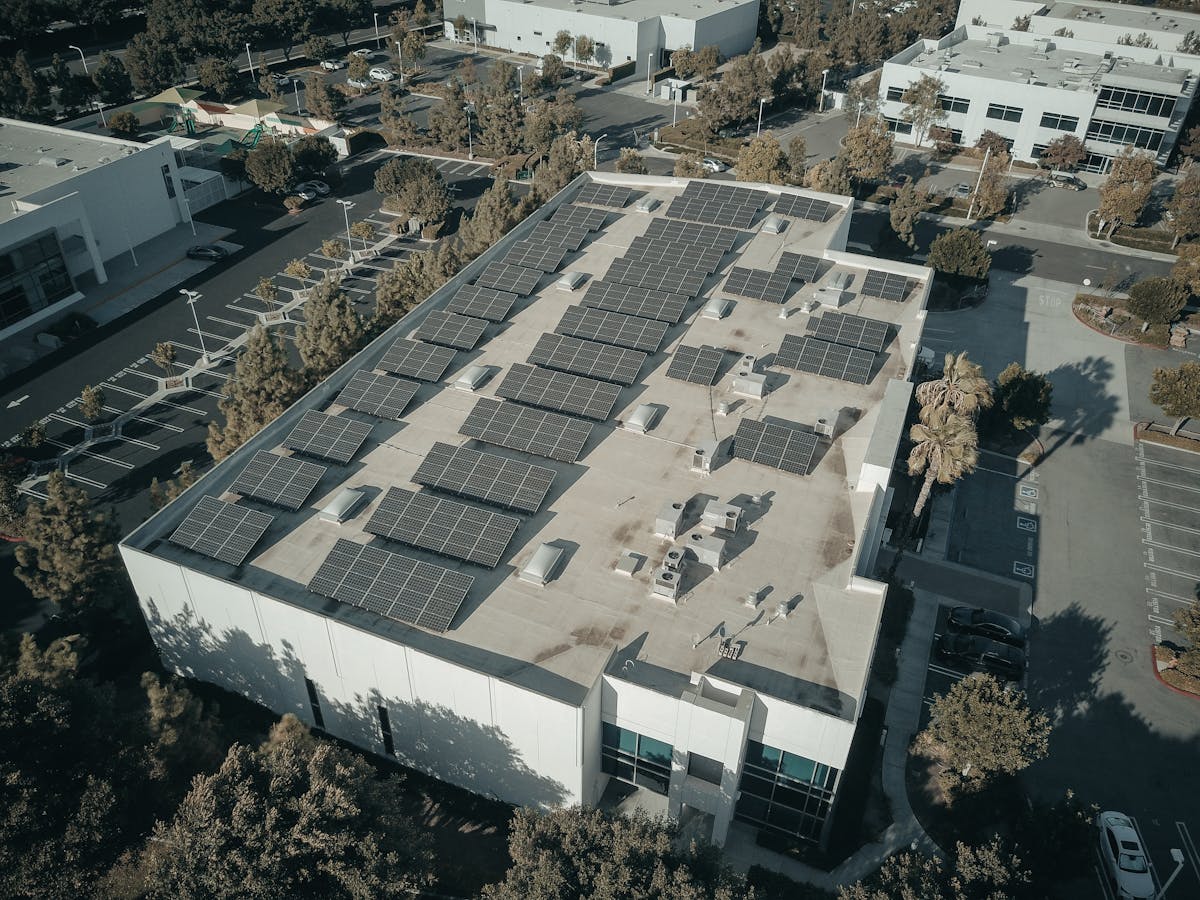
House Bill 2435 — the Portable Plug-in Solar Generation Act — allows Hawaii renters to install small, plug-in solar systems of up to 1,200 watts without their landlord’s permission for a full rooftop installation.[1] No roof penetrations. No permanent modifications. Just panels on your balcony or lanai, a micro-inverter, and a cord that plugs into a standard outlet. It sounds almost too simple, and for once, it mostly is.
What the Bill Actually Says
HB2435 creates a legal framework for what the industry calls “plug-in solar” or “balcony solar.” The concept has been mainstream in Germany for years — over 500,000 balkonkraftwerk units installed there by 2025.[2] Hawaii is among the first U.S. states to give it explicit legal protection.
The core provisions are straightforward. Tenants can install portable solar generation systems up to 1,200 watts on property they rent or lease. The system must plug into an existing electrical outlet — no hardwiring, no panel upgrades, no new circuits. Landlords and HOAs cannot impose blanket bans on these systems, though they can set reasonable safety and aesthetic standards.[1] They cannot simply say no.
That last part matters. Before HB2435, a renter who wanted solar had exactly one option: convince their landlord to invest $25,000 to $40,000 in a rooftop system on a property the renter might leave in a year. The math never worked for either party. Now there is a middle path.
Who This Is Actually For
Think about who rents in Hawaii. It is not just college students in Manoa apartments. Over 35% of Hawaii’s households are renter-occupied[3] — roughly 175,000 households locked out of solar because they do not own their roof.
Military families at Schofield Barracks, Fort Shafter, and Joint Base Pearl Harbor–Hickam cycle through Hawaii on two- and three-year assignments. They pay the same HECO rates as everyone else but would never invest in a rooftop system on housing they will leave in 24 months. A plug-in kit goes with them when they PCS to their next duty station or move into a different rental.
Condo owners without roof access are another huge group. You own your unit in a Kakaako high-rise, but the roof belongs to the association. HB2435 gives you a way to generate some of your own power from your lanai without touching common elements. Same story in Waikiki, where hundreds of condo buildings sit in some of the best sun exposure on the island and none of that light does anything for the people paying the electric bills inside.
And then there are the homeowners renting while they save up. Plenty of people in Ewa Beach, Mililani, and Waipahu rent single-family homes where the landlord simply is not interested in a solar investment. This law does not require the landlord to care. It just says they cannot stop you from doing something small and temporary on your own.
How Plug-in Solar Works
The technology is simpler than most people expect. A typical plug-in solar setup has two or three panels rated at 400 watts each, a grid-tied micro-inverter that converts DC to AC, and a standard 120-volt plug. You mount the panels on your balcony railing, lean them against a south-facing wall, or set them on a portable ground stand on your lanai. The micro-inverter attaches to the back of the panels and connects via a heavy-duty cord to a regular outlet.
When the panels produce electricity, it feeds into your unit’s wiring and offsets whatever loads are running — refrigerator, fans, lights, the Wi-Fi router you never turn off. Your HECO meter slows down or, during peak midday production, may briefly run backward. You are not storing power. You are not going off-grid. You are shaving kilowatt-hours off your bill in real time.
The systems are designed to shut down automatically if grid power goes out. This is a safety requirement, not a flaw — it prevents your panels from backfeeding electricity into lines that utility workers assume are dead.[4] It also means plug-in solar does not give you backup power during outages. For that, you still need batteries and a proper transfer switch.
Realistic Savings at Hawaii Rates
Here is where Hawaii’s notoriously high electricity rates actually work in a renter’s favor. HECO’s average residential rate runs $0.40–$0.43 per kilowatt-hour on Oahu[5] — roughly three times the national average of $0.16/kWh.[8] That rate gap is exactly what makes plug-in solar viable here when it barely pencils out on the mainland.
A 1,200-watt system in Hawaii generates approximately 1,500 to 1,800 kWh per year, depending on panel orientation, shading, and how many hours of direct sun your balcony actually gets. At current HECO rates, that translates to roughly $50–$75 per month in avoided electricity costs. A south-facing lanai on a high floor in Kakaako with no obstructions will hit the upper end. A partially shaded ground-floor patio in Kalihi will land closer to $40.
Equipment cost for a 1,200-watt plug-in kit runs $800–$1,500 depending on panel brand and inverter quality. At $60 per month in savings, the payback period is 13 to 25 months. After that, it is effectively free electricity for the remaining life of the panels — typically 25 years or more. You will almost certainly move before the panels wear out.
I will be direct about this: those numbers are good but they are not rooftop-solar good. A full rooftop system on a single-family home can eliminate your electric bill entirely and qualify for the 30% federal tax credit plus Hawaii’s state credit.[6] Plug-in solar chips away at your bill. It does not erase it. But for someone who cannot do rooftop, chipping away at a $350 monthly bill by $60 is real money.
What HB2435 Does Not Cover
The bill has clear boundaries, and you should know them before you buy anything.
The 1,200-watt cap is firm — that is the nameplate DC rating of the panels, not the AC output. You cannot daisy-chain two kits together and call it one system. Exceed 1,200 watts and you fall outside the law’s protection into standard interconnection territory, which requires utility approval, permits, and your landlord’s consent.
HB2435 does not override building safety codes. Your system still needs to meet UL listing requirements for the inverter and panels, and the micro-inverter must comply with IEEE 1547 anti-islanding standards.[4] You cannot rig up a homemade system with automotive panels and a modified power supply from Amazon. Equipment that lacks proper safety certifications can start fires, damage your apartment’s wiring, or backfeed lethal voltage to a utility worker.
The law also does not require your landlord to provide a suitable location. If your unit has no balcony, no lanai, and no outdoor space with sun exposure, the bill cannot conjure one. And while landlords cannot impose blanket bans, they can require that panels be securely mounted so they do not blow off the building in a Kona storm — which is a perfectly reasonable safety standard that you should follow regardless.
How This Changes the Market
Here is my professional take, and I am saying this as someone who installs rooftop systems for a living: HB2435 is good for everyone in the solar industry, including us.
Hawaii has committed to 100% renewable energy by 2045 under its Renewable Portfolio Standard — the most aggressive target of any U.S. state.[7] We are not going to get there with rooftop solar alone. The state needs every watt it can get, and 175,000 renter households represent an enormous untapped resource. If even 10% of those households install plug-in solar, that adds roughly 21 megawatts of distributed generation that did not exist before. Every kilowatt-hour those systems produce is one that does not come from burning imported petroleum at Kahe or Waiau.
There is a pipeline effect too. A renter who buys a $1,200 plug-in kit and watches their electric bill drop becomes a homeowner who installs a full rooftop system the day they close on a house. They have already seen what solar does. They do not need convincing. We have watched this exact pattern play out — people who started with a portable panel on their lanai and called us two years later for a 10-kilowatt rooftop installation with battery backup.
More distributed solar on the grid means lower peak demand and, eventually, downward pressure on rates for everyone. That is not idealism. It is how distributed generation works when enough people participate.
What You Should Do Next
If you rent in Hawaii and want to try plug-in solar, start by assessing your space. You need an outdoor area that gets at least four to five hours of direct sun during the middle of the day. South-facing is best. West-facing is second best. Anything facing north is not worth the investment. Check carefully for shading from neighboring buildings, trees, and overhangs — even partial shade on one panel can cut output from the entire string.
Buy equipment from a reputable supplier that sells UL-listed panels and inverters specifically designed for plug-in use. This is not the place to bargain-hunt on eBay. Look for micro-inverters with built-in anti-islanding protection and panels with MC4 connectors. The total kit should come with clear installation instructions and a manufacturer warranty.
Notify your landlord in writing before you install. HB2435 protects your right to do so, but advance written notice is smart practice. Reference the bill by name and keep a copy. If your landlord objects, point them to the statute — most will not fight a state law over two panels on a balcony railing.
And if you are a renter in a single-family home where the landlord is open to a conversation, ask them about a full rooftop installation. With the federal and state tax credits, the landlord can recover a significant chunk of the cost, and a solar-equipped rental commands higher rent in the Hawaii market. Some of our best residential projects started with a tenant making the suggestion and the owner realizing the investment made sense. If that conversation goes somewhere, give us a call — we have been doing this for over 30 years and we can walk both parties through the numbers.
The bottom line is this: if you rent in Hawaii and you have a sunny lanai, you no longer have to just accept a $350 electric bill as the cost of living here. HB2435 gave you an option. It is not a perfect option, and it will not replace a full rooftop system. But $60 a month back in your pocket is $60 a month back in your pocket.
Sources & References
- Hawaii House Bill 2435, Portable Plug-in Solar Generation Act. Hawaii State Legislature
- Fraunhofer ISE, “Balcony Solar Systems in Germany Exceed 500,000 Installations,” 2025. Fraunhofer ISE
- U.S. Census Bureau, Hawaii Housing Characteristics — approximately 35.5% of households are renter-occupied. U.S. Census Bureau
- IEEE 1547, Standard for Interconnection and Interoperability of Distributed Energy Resources. IEEE
- Hawaiian Electric residential rate schedules, Oahu average ~$0.40–$0.43/kWh. Hawaiian Electric
- Federal Investment Tax Credit (30%) and Hawaii State Energy Tax Credit for solar installations. U.S. DOE
- Hawaii Clean Energy Initiative, 100% Renewable Portfolio Standard by 2045. HCEI
- U.S. Energy Information Administration, Average Retail Price of Electricity — national residential average ~$0.16/kWh. EIA