We get this question at least twice a week: “Is my NEM going away?” The short answer is no. If you are on NEM, your program is grandfathered. HECO closed NEM to new customers in October 2015, but existing participants keep their full retail export credits indefinitely — as long as they do not trigger a program reassignment.
That last part is the one nobody explains clearly. Your NEM does not expire on a date. But certain actions — expanding your system, adding a battery without the right paperwork, or letting a careless installer file the wrong interconnection application — can move you off NEM permanently. Once you leave, you cannot come back. And the financial difference between NEM and the current SRE program is thousands of dollars per year.
Here is what NEM customers need to understand, what actions are safe, and when the math changes enough that leaving NEM voluntarily starts to make sense.
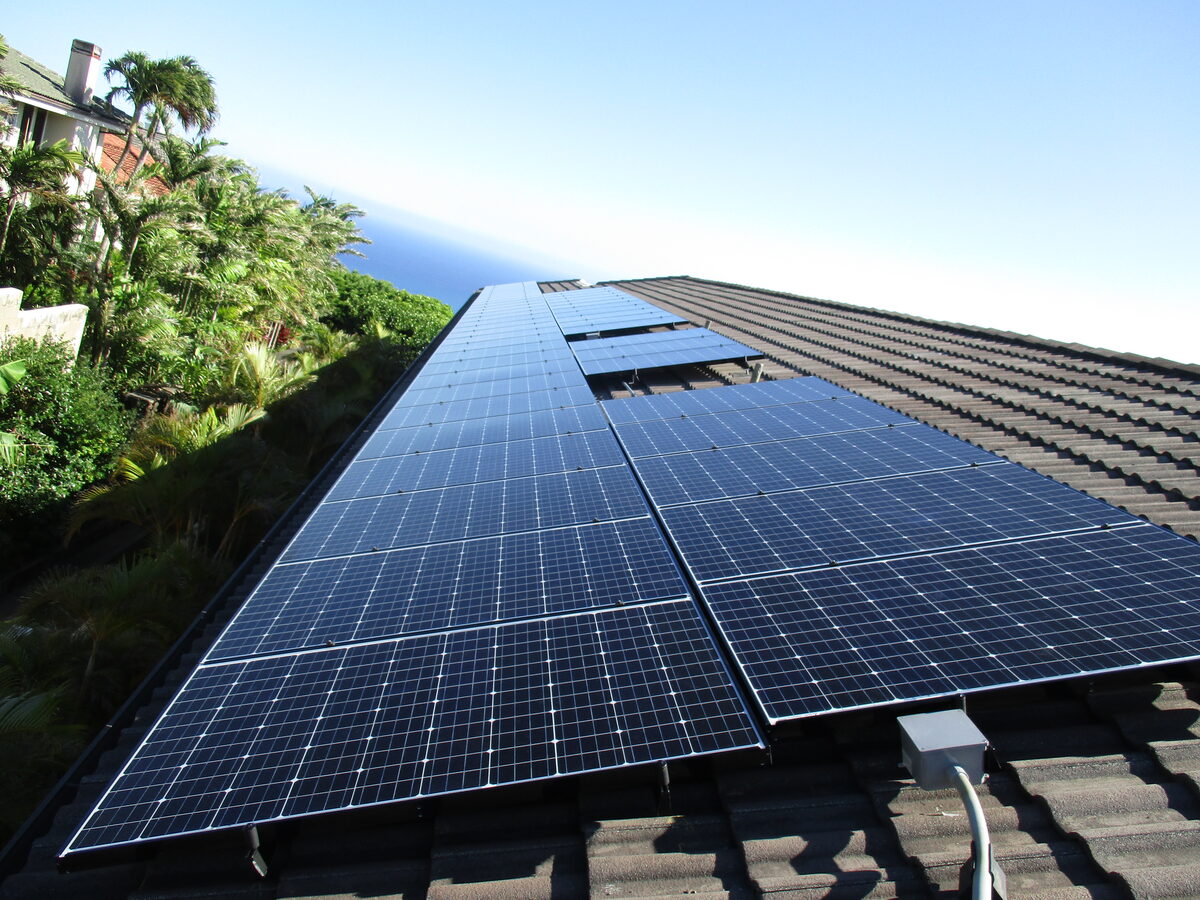
A Quick History of NEM in Hawaii
Net Energy Metering was the original deal. HECO closed NEM to new customers in October 2015, but everyone who was already on the program got grandfathered in. The terms were generous by any standard: for every kilowatt-hour your solar system exported to the grid, HECO credited you at the full retail rate. In 2026, that retail rate sits at roughly $0.4054 per kWh on Oahu.[1] One-to-one. Dollar for dollar. No time-of-use windows, no seasonal adjustments, no complicated schedules. Just full retail credit for every kWh you sent back.
That is an extraordinary deal, and HECO knows it. The utility's argument was always that NEM customers were being subsidized by non-solar ratepayers, since those export credits effectively shifted grid maintenance costs. Whether you agree with that framing or not, it drove every program that followed — CGS, CGS+, CSS, and now SRE — to pay progressively less for exported energy.
What Can and Cannot Change Your NEM Status
NEM is not on a countdown timer. But HECO has specific rules about what modifications are allowed under an existing NEM interconnection agreement, and what modifications trigger a program reassignment to SRE or another current tariff.
What you CAN do and stay on NEM: HECO allows NEM customers to replace failed or aging equipment (panels, inverters) and add up to 1 kW of additional capacity when upgrading. So if your 15-year-old inverter dies and you swap it for a current model, your NEM stays intact. If you replace degraded panels with slightly higher-wattage modern panels and the total system grows by up to 1 kW, that is permitted.
NEM+ (Non-Export Addition): HECO offers a NEM+ option that allows existing NEM customers to add non-export panels and battery storage to their system without losing NEM status. The additional capacity is configured for self-consumption only — it does not export to the grid. This lets you add a Powerwall and additional panels to power your home overnight or during outages while keeping your full retail NEM export credits on your original system. NEM+ is the mechanism that makes adding battery storage to a NEM system possible without sacrificing your program.
What WILL trigger reassignment: Expanding your system beyond the 1 kW tolerance, filing a new export interconnection application, or having an installer carelessly submit paperwork that changes your tariff. Once you leave NEM, it is permanent. There is no going back.
What SRE Looks Like After NEM
If you do lose NEM status, HECO moves you to the Smart Renewable Energy Export program — SRE. Under SRE, exports are credited on a time-of-use schedule.[2] Midday exports between 9am and 5pm earn $0.135 per kWh. Peak evening exports from 5pm to 9pm earn $0.329 per kWh. Overnight from 9pm to 9am pays $0.189 per kWh. If you are a solar-only system without a battery, the vast majority of your exports happen during that midday window. You go from earning $0.4054 for every exported kWh to earning $0.135 for most of them.
That is a 67% pay cut. Which is why protecting your NEM status matters so much.
CGS+ Customers Face the Same Cliff
NEM is not the only legacy program in transition. HECO began the CGS and CGS+ transition process in October 2024.[3] Customer Grid-Supply customers had a fixed export credit rate that was lower than NEM's retail-rate deal but still meaningfully higher than SRE's daytime rate. If you are on CGS+ and your agreement is reaching its term, the same automatic transition to SRE applies.
The financial impact depends on what your CGS+ rate was locked at, but the direction is the same: less money per kWh exported during the hours when a solar-only system does most of its exporting. CGS+ customers on Oahu were typically locked in at rates between $0.15 and $0.21 per kWh — still better than SRE's midday rate in many cases, but the gap is narrower than it is for NEM customers. The urgency is lower, but the analysis is the same.
Why NEM Is Still More Valuable Than SRE
This is where we get blunt: NEM is the best solar deal HECO has ever offered, and nothing currently available comes close for a solar-only customer. The math is not subtle.
Take a typical 10 kW system on a south-facing roof in Mililani producing around 14,600 kWh per year, with about 60% of that exported. On NEM, those 8,760 exported kWh at $0.4054 per kWh generate $3,551 in annual credits. The same system on SRE, exporting mostly during midday at $0.135 per kWh, generates roughly $1,183 in annual credits. That is a difference of $2,368 per year. Over a remaining system life of 15 years, you are looking at over $35,000 in lost value.
If your NEM agreement has not expired, do not voluntarily switch. We cannot say this strongly enough. We have seen homeowners get talked into switching programs by companies pitching battery add-ons without first running the numbers on what the NEM credits are actually worth. Our professional opinion: any solar company that recommends you leave NEM without showing you a detailed financial comparison is either incompetent or not acting in your interest.
When the Math Changes: NEM Expiration Plus Battery
Once your NEM agreement actually expires and you are on SRE whether you like it or not, the calculation shifts. SRE's time-of-use structure creates an opportunity that NEM's flat rate never did: peak rate arbitrage.
With a battery, you store your midday solar production instead of exporting it at $0.135. Then you export that stored energy during the 5pm to 9pm peak window at $0.329 per kWh. The spread between those two rates — $0.194 per kWh — is pure value created by the battery's ability to time-shift your energy. A Tesla Powerwall 3 with 13.5 kWh of usable capacity[4], cycling daily through that peak window, captures roughly $950 per year in additional export value compared to exporting that same energy at midday.
Then stack HECO's BYOD+ incentive on top. When you add a battery and enroll in BYOD+, HECO pays you $400 per kW of dispatch capacity upfront.[5] For a Powerwall 3 with 11.5 kW continuous output, that is $4,600 in your pocket on day one. Low-to-moderate income households qualify for an additional $400/kW adder, potentially doubling that to $9,200. The commitment is a 5-year agreement allowing HECO to dispatch your battery for 2 hours daily during peak demand, with a 20% backup reserve always maintained for outage protection.
And the battery itself — not the solar panels, just the standalone battery — still qualifies for the 30% federal Investment Tax Credit through 2032.[6] On a $14,000 installed Powerwall, that is roughly $4,200 back in federal tax credits.
Running the Actual Numbers: NEM Hold vs. SRE + Battery
Here is the comparison that matters. Take that same 10 kW system in Mililani.
Scenario one: you stay on NEM for as long as your agreement allows. Your 8,760 exported kWh earn $3,551 per year at full retail. No battery cost, no additional complexity. Annual value: $3,551.
Scenario two: your NEM expires and you move to SRE without a battery. Same exports, now mostly at $0.135/kWh. Annual value drops to approximately $1,183. You lose $2,368 per year.
Scenario three: NEM expires, you add a Powerwall 3 and enroll in both SRE and BYOD+. Your midday solar charges the battery. Peak exports at $0.329/kWh generate roughly $2,133 in annual SRE credits. The BYOD+ upfront payment of $4,600, amortized over 5 years, adds $920 per year. The 30% federal ITC on the battery saves $4,200 upfront. Annual effective value in year one through five: roughly $3,053 plus the amortized incentives. Net battery cost after BYOD+ and the ITC comes to around $5,200, which peak arbitrage pays back in under three years.
The gap between scenario one and scenario three is much narrower than the gap between scenario one and scenario two. That is the point. A battery does not fully replace NEM's value, but it recovers a significant portion of it once NEM is gone.
The Trap: Installers Who File the Wrong Paperwork
Here is the mistake we see too often. A homeowner on NEM decides to add a battery. The installing company, either through carelessness or ignorance of NEM+ rules, files a new standard interconnection application instead of a NEM+ non-export addition. That filing triggers a program reassignment to SRE. The customer loses NEM permanently — often without understanding what happened until their next HECO bill arrives with dramatically lower credits.
We had a consultation with a family in Ewa Beach who had been on NEM since 2013. A competitor had quoted them a battery installation and included an SRE transition in the paperwork without clearly explaining what they were giving up. They would have lost an estimated $2,100 per year in NEM credits. We showed them the comparison, explained the NEM+ pathway that would let them add battery while keeping NEM, and they are now working with us on a properly filed NEM+ addition.
Before you sign anything with any installer, ask one question: “Will this filing change my HECO program?” If the answer is yes, or if they do not know what NEM+ is, find someone who does.
The key mechanism is NEM+. If you are on NEM and want to add a battery, the correct approach is filing a NEM+ interconnection for the non-export addition. Your original NEM export credits stay intact. The battery charges from your solar during the day and powers your home at night or during outages — it just does not export the stored energy to the grid under a separate tariff. You keep your 1:1 retail credits on the original system and gain backup power and self-consumption from the battery.
Any installer who tells you that adding a battery requires leaving NEM has either not done the homework on NEM+ or is not acting in your interest. This is a critical detail, and getting it wrong costs thousands per year.
How to Check Your Agreement Status
Your HECO program and agreement details are on your monthly electric bill, typically listed under the rate schedule or tariff section. Look for abbreviations: R-NEM, CGS, CGS+, or SRE. You can also call HECO customer service at (808) 548-7311 or log into your account at hawaiianelectric.com to review your interconnection agreement, including its effective date and term length.
If your bill shows R-NEM or NEM, you are on the grandfathered program and your full retail export credits are active. There is no expiration date to worry about — but you should know your program status so you can protect it when making system decisions. Keep a copy of your original interconnection agreement so any future installer can verify your NEM status before filing paperwork.
Do not rely on memory or assumptions. Pull the paperwork or call HECO. We have seen customers who thought they were on NEM discover they had been moved to a successor program years earlier, and others who assumed they needed to act urgently when their program was perfectly secure.
What We Recommend
After 33 years of installing solar on Oahu and navigating every HECO program change since the beginning, here is our guidance.
If you are on NEM, protect it. Do not switch programs. Do not let an installer switch you during a battery add-on. Do not assume SRE is “newer and therefore better.” NEM at full retail rate is worth more than any current program for exported solar energy. Period.
If you want to add battery storage while on NEM, use the NEM+ pathway. You keep your export credits and gain backup power and self-consumption. This is the right approach for most NEM customers who want battery without sacrificing their program.
If you need to replace aging equipment, HECO allows up to 1 kW of additional capacity during equipment upgrades. Stay within that limit and your NEM is preserved.
If you are on CGS+ and approaching your term end, the same logic applies but the numbers are different. Your current rate may already be close to SRE's midday rate, which means the drop-off is less dramatic. A battery still helps with peak arbitrage, but the urgency depends on your specific locked-in rate.
And no matter which program you are on, do not make decisions based on a sales pitch. Run the numbers. Our HECO Program Navigator walks you through the options based on your specific situation — your current program, your system size, your consumption pattern, and whether a battery changes the math in your favor. It takes about two minutes and it could save you thousands.
The Bottom Line
NEM was the golden era of Hawaii solar economics, and customers who got in before October 2015 are still benefiting from full retail credits. That program does not expire — but it can be lost through careless system modifications or installer paperwork. The most important thing a NEM customer can do is understand what changes are safe (equipment replacement up to +1 kW, NEM+ non-export additions) and what changes trigger permanent reassignment (new export interconnection applications, system expansions beyond the tolerance). The second most important thing is choosing an installer who understands these rules and files the correct paperwork.
Check your agreement. Know your date. And if the numbers do not make sense to you, talk to someone who has been reading HECO tariff sheets since before SRE existed. That is what we are here for.
Sources & References
- Current residential electricity rate schedules for Oahu. Hawaiian Electric
- Smart Renewable Energy (SRE) export program — time-of-use credit rates. Hawaiian Electric
- CGS and CGS+ program transition timeline and customer notices. Hawaiian Electric
- Tesla Powerwall 3 specifications — 13.5 kWh capacity, 11.5 kW continuous output. Tesla
- BYOD+ battery incentive program — $400/kW upfront payment and LMI adder. Hawaiian Electric
- Residential Clean Energy Credit (Section 25D) — 30% ITC for standalone battery storage. Internal Revenue Service