A couple in Kailua called us last summer about air conditioning. They had just moved from the mainland, where every house has central AC, and they were shocked to find their 1970s Hawaii home had no ductwork at all. They wanted to know what it would cost to install a central system.
About $18,000, we told them. Plus a week of construction. Plus cutting into walls and ceilings that had never been designed for ducts. Plus $150–$200/month in electricity to run it.
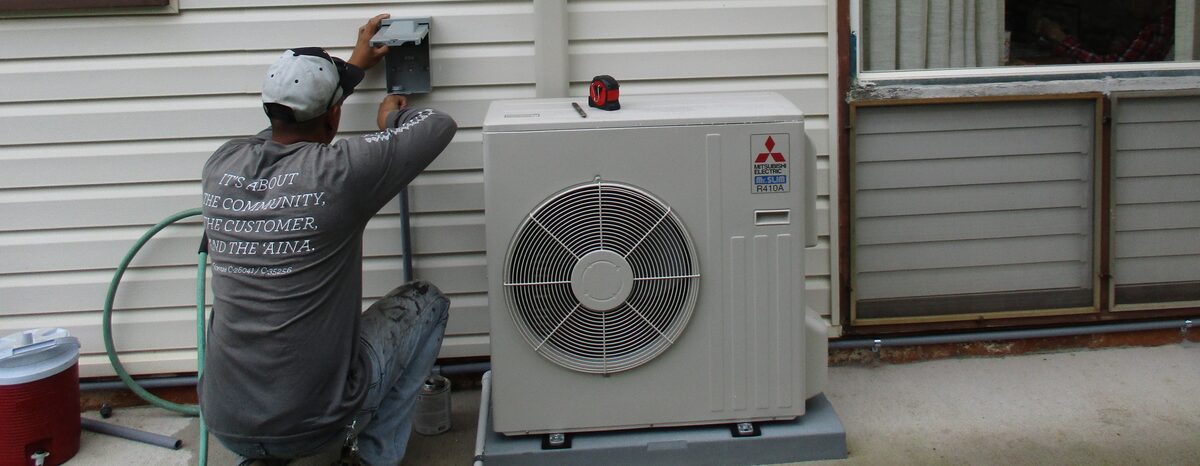
Or, we said, we could install a three-zone Mitsubishi mini-split for about $9,000, in two days, with a 3-inch hole in the wall for each unit, running at $50–$70/month. They went with the mini-split. Six months later they told us it was the best decision they made in their first year on the island.
That story plays out constantly in Hawaii.
The Numbers Side by Side
| Ductless Mini-Split | Central AC | |
|---|---|---|
| Efficiency (SEER) | Up to 33.1[1] | 14–21 typical[2] |
| Requires ductwork | No | Yes |
| Zone control | Yes — cool only rooms you use | No — cools entire house |
| Installation time | 1–2 days | 3–7 days (with ductwork) |
| Noise level | 19–32 dB (whisper quiet)[1] | 50–70 dB |
| Cost (2–3 rooms) | $5,000–$12,000 | $12,000–$25,000+ |
| Energy cost per month | $40–$80 | $100–$200+ |
| Best for | Homes without ducts, targeted cooling | Homes with existing ductwork |
Why Mini-Splits Win in Hawaii
The majority of residential homes in Hawaii were built without central air conditioning. No ducts. No air handler closet. No return vents in the hallway. Retrofitting ductwork into a house that was never designed for it costs $5,000–$15,000+, requires cutting into walls and ceilings, and takes a week or more of construction. A ductless mini-split needs a 3-inch hole in the wall for the refrigerant line.[1] That is it.
But the ductwork issue is just the starting point. The real advantage is zone control. Central AC cools your entire house whether you are using every room or not. A three-bedroom home in Mililani with central AC is pumping cold air into the guest room, the office, and the hallway even when everyone is in the living room. A mini-split system with three zones — master bedroom, kids' room, living room — only cools the rooms that need it. In Hawaii's mild climate, most families run AC in bedrooms at night and the living area during the hottest afternoon hours. That zone-by-zone approach uses 30–50% less electricity than cooling the whole house.[2]
The efficiency numbers are not even in the same league. Mitsubishi's best mini-splits hit SEER ratings of 33.1.[1] The best residential central AC systems top out around 21 SEER.[2] At $0.40+/kWh, that gap translates to $500–$1,000+ per year in operating costs. Over 15 years, you could buy a second mini-split system with the savings.
And here is the detail solar homeowners care about: a 2–3 zone mini-split system adds roughly 200–400 kWh/month to your electricity use. At Mitsubishi's efficiency levels, that can be fully offset by adding just 2–3 panels to your solar array. With solar, your net AC cost is effectively zero. Try doing that with a central system drawing twice the power.
When Central AC Actually Makes Sense
We are not going to pretend mini-splits are always the answer. If your home already has ductwork in good condition — newer construction, some military housing — central AC is a perfectly reasonable choice. If you want every room cooled simultaneously all day long, central handles that better. If you cannot stand the look of wall-mounted indoor units (some people do not want a white rectangle on their bedroom wall), central hides everything behind vents.
That said, ducted mini-split systems exist and deserve consideration. They hide the indoor unit in the ceiling with only a small vent visible, giving you the concealed look of central AC with mini-split efficiency. We install these in living rooms and master bedrooms where homeowners want clean walls but do not want to pay central AC operating costs. Short duct runs from a ceiling-mounted unit keep efficiency high while making the hardware disappear.
Mitsubishi Mini-Split System Types
Wall-Mounted
The most common type. Slim indoor unit mounts high on the wall. Quiet, efficient, easy to maintain. Best for bedrooms and living rooms.
Ceiling Cassette
Recessed into the ceiling for a more discreet look. Popular in living rooms, offices, and commercial spaces where wall space is limited.
Ducted (Concealed)
Hidden in the ceiling with only a small vent visible. Provides the hidden-unit look of central AC with mini-split efficiency. Works with short duct runs.
Size It Right
An oversized AC unit short-cycles.[2] An undersized one runs constantly and never catches up. Either way, you waste money. Our AC Sizing Tool takes about 60 seconds — plug in your room dimensions, ceiling height, sun exposure, and insulation, and it gives you a BTU recommendation for each room with both single-zone and multi-zone options and approximate pricing.
Sources & References
- Mitsubishi Electric Trane HVAC US, Ductless Mini-Split Systems specifications and SEER ratings. Mitsubishi Comfort
- U.S. Department of Energy, Energy Saver — Ductless Mini-Split Heat Pumps and central AC efficiency standards. DOE
- Hawaii Energy, Residential rebate programs for energy-efficient HVAC systems. Hawaii Energy
- ENERGY STAR, Ductless Heating and Cooling product specifications. ENERGY STAR
- AHRI (Air-Conditioning, Heating, and Refrigeration Institute), HVAC equipment efficiency directory. AHRI