During Hurricane Douglas in 2020, our phones lit up the Monday after the storm passed. One customer in Hawaii Kai told us his neighbors had been running generators — hauling gas cans, dealing with fumes, praying nothing flooded — while his Powerwall powered the whole house silently. His kids did not even know the grid was down until he told them.
Douglas was a near miss. It passed within 30 miles of Oahu as a Category 1 storm.[1] A slight wobble in the track and the most populated island in the state takes a direct hit. That is not a hypothetical. That is what almost happened to nearly a million people.
The 2026 hurricane season runs from June 1 through November 30. If you are thinking about preparedness, April is when to act. Not June.
Hawaii Has Been Hit Before
People who moved here recently sometimes assume hurricanes do not really threaten Hawaii. Ask anyone who lived on Kauai in September 1992.
Hurricane Iniki made direct landfall as a Category 4 storm with 145 mph sustained winds.[2] It destroyed or severely damaged 14,000 homes. The entire island lost power. Some neighborhoods in Poipu and Waimea did not get electricity back for months. Total damage exceeded $3 billion in today's dollars. There are still homes on Kauai with Iniki scars in the framing.
Hurricane Lane in August 2018 weakened before arrival but dumped over 52 inches of rain on parts of Hawaii Island — a state record.[3] Flooding, landslides, power outages across multiple islands. Tropical Storm Darby crossed directly over Hawaii Island in July 2022. And Douglas, the near miss on Oahu, was a reminder that the most populated island in the chain is not immune. It is overdue.
What Happens to the Grid
High winds snap utility poles and drag down lines. Flying debris wraps around conductors. Coastal substations flood from storm surge. Power plants may shut down as a precaution or sustain direct damage. This is the predictable sequence for every major tropical cyclone.
On the mainland, neighboring states send mutual-aid crews and emergency power. Hawaii has no neighbors. Each island restores its own grid with local crews and whatever equipment is on-hand. After Iniki, restoration crews on Kauai had to inspect every single pole, every line, every transformer before re-energizing each circuit. It took months, not days.
A direct hit on Oahu, with its complex grid serving nearly a million residents, would create outages that dwarf anything in recent Hawaii history.
How Solar + Battery Changes the Equation
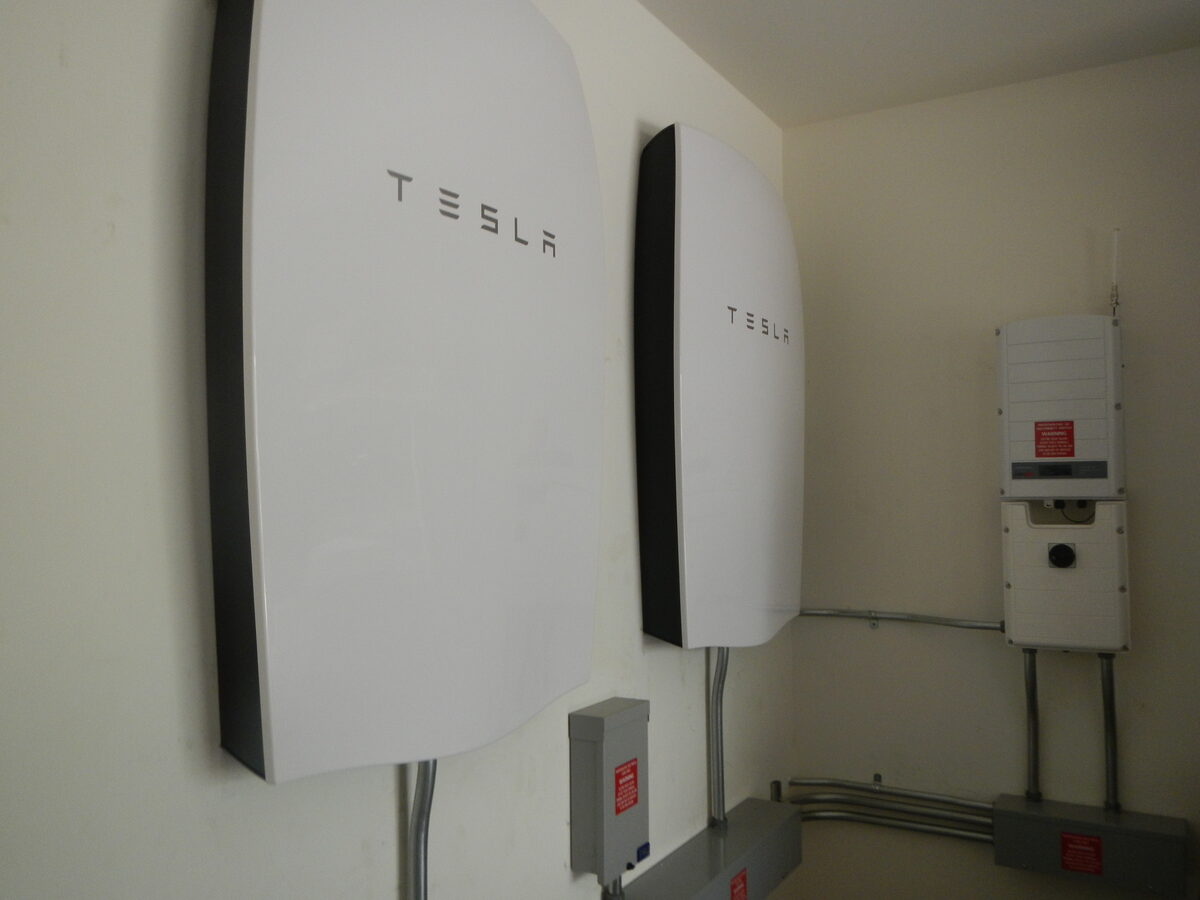
When the grid drops, a Tesla Powerwall detects the outage in less than 20 milliseconds[4] — faster than a light bulb can flicker — and disconnects your home from the grid. You switch to battery power so smoothly that clocks do not reset, computers do not reboot, and the refrigerator hums right along.
Here is the part that matters during a multi-day outage: without a battery, your solar panels shut off when the grid goes down. That is a safety requirement called anti-islanding — it prevents your system from feeding electricity into downed lines where workers are repairing them. But with a Powerwall, the panels keep running in island mode, generating power that charges the battery and runs your house. Daylight means energy. Even under overcast hurricane skies, panels produce 10 to 25 percent of their rated output from diffuse light.[6] Once the storm passes and skies clear, production bounces back to near-normal while the rest of the neighborhood may still be waiting days for HECO crews.
The Tesla app lets you choose which circuits get power first. Refrigerator, medical equipment, lights, Wi-Fi, phone chargers — those are the priorities. The pool pump and electric dryer can wait. That intelligent load management stretches your backup duration significantly.
Pre-Hurricane Checklist
If you already have solar and battery storage, get these done before June.
Set your backup reserve to 100 percent in the Tesla app when a storm is approaching. This holds the battery fully charged for the outage instead of using it for daily export or self-consumption. Set it back to your normal preference after the storm passes.
Update your firmware. Tesla pushes updates that improve storm response and load management. An outdated version may be missing features that matter when your house is running on battery for three days.
Get your mounting hardware inspected. Have a qualified technician check every bolt, verify the flashing seals, and confirm the racking system is tight. Modern installations are engineered for sustained winds of 110 to 140 mph,[5] but only if the hardware is properly maintained. Annual maintenance catches loose fasteners before they become a problem at 90 mph.
Trim your trees. Overhanging branches that could fall on panels or your roof during high winds need to come down now. Not when the storm watch is posted.
Document everything. Photograph your panels, inverter, and battery installation. Store serial numbers, warranty info, and your installer's contact information somewhere waterproof or in the cloud. Insurance claims go faster with documentation.
Test your system. Turn off your main breaker for an hour and see what happens. Know which loads are on the backup panel and which are not. Know how your house feels running on battery so there are no surprises during an actual event.
Sizing for Resilience
| Configuration | Capacity | What It Powers | Duration (No Solar) |
|---|---|---|---|
| 1 Powerwall 3 | 13.5 kWh | Essentials: fridge, lights, Wi-Fi, phone charging, medical devices | 12–18 hours |
| 2 Powerwall 3s | 27 kWh | Whole home comfort: essentials plus AC, cooking, laundry | 24–36 hours |
| 3 Powerwall 3s | 40.5 kWh | Extended whole home: multi-day full operation | 36–48+ hours |
With solar recharging, those numbers extend dramatically. A single Powerwall paired with a solar system can sustain critical loads indefinitely during a prolonged outage, as long as the sun comes up. Even hurricane-overcast skies provide some recharging. The day after the storm, when blue sky breaks through, your system is back to full production while the grid may still be weeks from repair.
No Utility Can Promise Power Through a Hurricane
This is not a knock on Hawaiian Electric. It is physics. No overhead distribution system on Earth can take a direct hit from a major hurricane and keep running. Crews work around the clock after storms, but restoration is methodical and slow for good reason — re-energizing damaged circuits kills people if it is done carelessly.
Your battery does not depend on utility poles. It does not need transmission lines or substations or restoration crews. It is sitting on the side of your house or in your garage, fully charged, ready to go the instant the grid drops. That is a different kind of reliability entirely.
April, Not June
From contract to commissioning, a solar-plus-battery installation takes 4 to 8 weeks. Site assessment, system design, permitting, equipment procurement, installation. That timeline does not compress because a tropical storm just formed south of the Big Island.
Start in April and your system is running well before June 1. You save money on your electric bill in the meantime. And when the Central Pacific Tracking Center starts naming storms, you can watch the forecast with concern for your neighbors instead of panic for your own family.
We have been installing these systems since 1993. We have seen what storms do to the grid, and we have seen what battery backup does for the families who had the foresight to install it. Contact us today to talk about hurricane-ready options for your home.
Sources & References
- Hurricane Douglas (2020) track, intensity, and closest approach to Oahu. NOAA National Hurricane Center
- Hurricane Iniki (1992) storm data, damage assessment, and impact on Kauai. NOAA Weather Forecast Office Honolulu
- Hurricane Lane (2018) rainfall totals and flooding impacts on Hawaii Island. NOAA Weather Forecast Office Honolulu
- Tesla Powerwall technical specifications including sub-20ms grid outage detection and automatic transfer. Tesla Powerwall
- Solar panel wind load ratings and mounting system engineering standards for hurricane zones. NREL
- Solar panel performance under overcast and diffuse light conditions. NREL