A homeowner in Hawaii Kai called us last year about adding a small solar hot water system — a straightforward project on a single-story home. During the permit review, DPP flagged the property as being in a FEMA Special Flood Hazard Area. The city told her she would need a No-Rise Certification before the permit could be issued. She had never heard the term. Nobody she talked to — not the plumber, not the permit tech, not her neighbor who had installed the same system two years earlier without any issue — could give her a clear answer on what it meant or what it would cost.
That story repeats across Oahu every week. And it is one of the most frustrating parts of homeownership in Hawaii that almost nobody talks about until they are already stuck in it.
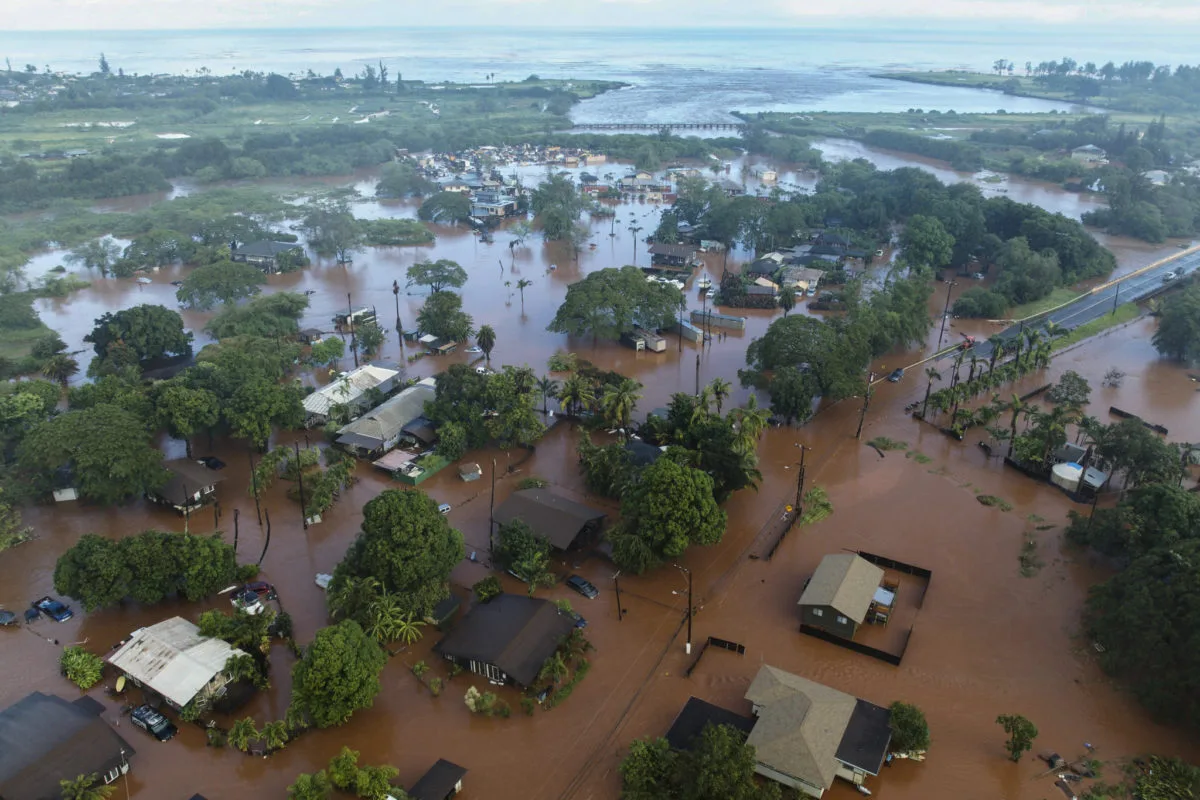
What FEMA Flood Zones Actually Mean
FEMA — the Federal Emergency Management Agency — maps flood risk across the entire United States through the National Flood Insurance Program (NFIP). These maps, called Flood Insurance Rate Maps (FIRMs), divide every property into flood zones based on the probability and type of flooding.[1] In Hawaii, where we have coastal storm surge, stream flooding, tsunamis, and heavy rainfall runoff all in play, a surprising number of residential properties fall within designated flood zones.
Here are the zones you will encounter on Oahu and the neighbor islands:
High-Risk Zones (Special Flood Hazard Areas)
Zone VE is the most restrictive. The “V” stands for velocity — these areas face coastal flooding with wave action. Think oceanfront properties in Waikiki, North Shore beachfront homes, and low-lying coastal areas where storm surge carries destructive wave energy. Construction in VE zones must meet the strictest standards: structures must be elevated on pilings or columns, with the lowest floor above the Base Flood Elevation (BFE), and the area below must be free of obstructions.[1] You cannot enclose the space below the BFE with anything that would block floodwaters.
Zone AE is the most common high-risk designation in Hawaii. These are areas with a 1% annual chance of flooding — the so-called “100-year flood” — where base flood elevations have been determined. You will find AE zones along the Ala Wai Canal in Waikiki, throughout parts of Mapunapuna, low sections of Salt Lake, stream corridors in Kaneohe and Kailua, and large sections of Hawaii Kai. New construction must be elevated to or above the BFE. Existing structures face restrictions on renovations and improvements.[2]
Zone AE Floodway (sometimes written as AEF or shown as a hatched pattern on FIRM maps) is the critical subset within AE zones. The floodway is the channel of a stream or river plus any adjacent floodplain that must be kept clear to carry the base flood discharge.[1] This is where no-rise certification requirements hit hardest. Any development in a floodway must demonstrate — through engineering analysis — that it will cause zero increase in flood levels. Not a small increase. Zero.
Zone AH covers areas of shallow flooding, typically one to three feet, with a determined BFE. These appear around ponding areas and depressional terrain. Same elevation requirements as AE.
Other FEMA Labels You May See on Maps
Zone A is also important and the article should not skip it. Zone A is still a high-risk Special Flood Hazard Area with a 1% annual chance of flooding, but unlike AE it does not show a published base flood elevation on the map. That matters because homeowners sometimes assume “no BFE shown” means less regulation. It does not. It usually means the area was not studied in the same level of detail as AE.[1]
Zone AO is another meaningful omission if you are trying to help homeowners read FEMA maps correctly. AO zones represent shallow flooding, usually sheet flow or drainage flow, with average flood depths shown rather than a standard BFE line. In practical terms, AO can matter for low-lying properties affected by runoff and ponding even when the map does not look like a classic river or shoreline floodplain.[1]
Zone V is the coastal counterpart to VE. It signals wave-action risk in a coastal high-hazard area, but without the detailed base flood elevations shown on VE maps. On newer Hawaii maps you are more likely to see VE, but homeowners reviewing older map panels or secondary flood tools can still run into the unnumbered V label.[1]
Zone A99 and Zone AR are less common in Hawaii residential permitting, but they are part of FEMA’s official flood-zone system and worth recognizing. A99 refers to areas that are expected to be protected by a federal flood-control project that is sufficiently far along for insurance-rating purposes. AR refers to areas with temporarily increased risk because a flood-control system is being restored, such as a levee or dam. These are more common in mainland river systems than on Oahu, but a complete flood-zone explainer should acknowledge them.[1]
Zone D is the catch-all for undetermined flood risk. It means FEMA knows flood risk may exist but has not studied the area enough to assign a specific hazard level. That does not automatically trigger the same permit rules as an AE floodway, but it is not the same thing as low risk either.[1]
Moderate and Low-Risk Zones
Zone X (shaded) represents the 500-year floodplain — moderate risk, between the 100-year and 500-year flood levels. No mandatory flood insurance or special construction requirements, though lenders sometimes require insurance anyway.
Zone X (unshaded) means minimal flood risk. This is where most of Oahu’s residential areas fall — Mililani, parts of Pearl City, Aiea Heights, upper Kailua, most of the ridge-and-valley neighborhoods. If your property is in Zone X unshaded, flood zone regulations do not apply to your permit.
If you are comparing older FEMA map panels or third-party summaries, you may also see the legacy labels B and C instead of shaded and unshaded X, plus older numbered designations like A1-A30 and V1-V30. Those are mostly map-format legacy labels, not separate modern risk concepts, but they still show up often enough to confuse homeowners reading older documents.[1]
The Map Problem: When Nobody Agrees Whether You Are In a Flood Zone
Here is where the frustration begins — before you even get to permitting.
Hawaii’s official flood hazard tool is the Flood Hazard Assessment Tool (FHAT) at fhat.hawaii.gov.[3] It overlays FEMA’s flood zones on a satellite or street map of your property. In theory, you type in your address, and it tells you whether you are in a flood zone. In practice, the results can be maddeningly inconsistent.
We have seen properties that appear to be inside a flood zone boundary when viewed at one zoom level, and clearly outside it at another. The boundary line shifts depending on which base map layer you select. A property near the edge of an AE zone can appear to be in the flood zone on one view and outside it on the next. The underlying issue is resolution: FEMA’s FIRM data was digitized from older paper maps in some areas, and the polygon boundaries do not always align precisely with modern parcel data at every scale. FEMA’s own documentation warns that the digital flood data displayed on web viewers “are not the legal document to be used when making a single site flood hazard determination” and that the horizontal control is consistent with mapping at 1:12,000 scale — meaning parcel-level accuracy was never the intent.[3]
This matters because the determination is binary. If any portion of your structure touches the worse flood zone boundary, DPP treats the entire project as if the property is in that zone. Your house could be 98% in Zone X, but if one corner of the roofline crosses into AE floodway territory on the FHAT map, you are subject to floodway regulations for any work that triggers a permit — including work being done entirely on the opposite side of the house.
FEMA released preliminary updates to Oahu’s Flood Insurance Rate Maps on July 31, 2024, with updated maps becoming effective June 10, 2026.[4] Some properties that have never been in a flood zone are being reclassified as SFHAs for the first time. Others are shifting from AE to AE floodway. If you have not checked your property’s status against the updated maps at resilientoahu.org, do it now — before you plan any project.
A homeowner in Kaneohe told us he had owned his home for 22 years, never had flood insurance, and never had any flood-related issue on a permit. Then the updated maps put his property into an AE zone, and suddenly the AC replacement he had been planning for months required documentation he had never heard of. “Nobody told me,” he said. Nobody does, until the permit application gets flagged.
What Triggers Flood Zone Requirements on a Permit
Under the Revised Ordinances of Honolulu Chapter 21A — Flood Hazard Areas — virtually any “development” on a property within a Special Flood Hazard Area requires compliance with flood regulations.[2] And the NFIP defines “development” broadly: any man-made change to improved or unimproved real estate, including but not limited to buildings, structures, mining, dredging, filling, grading, paving, excavation, or drilling operations.
That definition is where the trouble starts. It was written to capture activities that alter the floodplain: filling in a stream corridor, building a new structure that obstructs flood flows, grading terrain that changes how water moves through a neighborhood. But as written, it also captures a homeowner bolting a 50-pound mini-split condenser to an exterior wall. Or mounting 20 solar panels flat on an existing roof. Or replacing a failed water heater with a solar hot water system.
The code does not distinguish between a 5,000-square-foot addition that fills a floodway and a rooftop solar array that sits six inches above existing shingles. Both are “development.” Both trigger the same compliance pathway.
No-Rise Certification: The Expensive Study for Small Projects
If your property is in a FEMA-designated floodway (AE floodway / AEF), any proposed development must demonstrate that it will not cause any increase — not even 0.01 feet — in the base flood elevation.[5] The vehicle for proving this is a No-Rise Certification, also referred to as a No-Impact Certification in some jurisdictions.
A No-Rise Certification requires a licensed professional engineer to perform a hydraulic analysis. This is not a casual review. The engineer must:
| Step | What It Involves |
|---|---|
| Obtain existing conditions model | Use the same HEC-RAS hydraulic model FEMA used for the Flood Insurance Study, or build a new one calibrated to the effective FIRM data |
| Model proposed conditions | Add the proposed development (the solar array, the AC condenser, the addition) to the model and re-run the hydraulic analysis |
| Compare results | Demonstrate that the proposed conditions produce zero increase in water surface elevation at any cross-section |
| Certify and stamp | PE stamps the certification form, attaches model output, and submits to the permitting authority |
The hydrological and hydraulic study underlying a No-Rise Certification typically uses the U.S. Army Corps of Engineers’ HEC-RAS (Hydrologic Engineering Center’s River Analysis System) software — the same tool used for floodplain mapping nationwide.[6] It is a serious piece of engineering. For a complex project near a stream corridor, it makes complete sense. The analysis ensures that new development does not push floodwaters onto neighboring properties.
For a rooftop solar installation on an existing single-family home? The analysis costs anywhere from $5,000 to $15,000 depending on the complexity of the site, the availability of existing FEMA models, and how many iterations the engineer needs.[7] That is on top of the cost of the project itself. For a $7,000 solar hot water system or a $4,000 mini-split AC installation, the hydraulic study can cost more than the equipment.
Let that sink in. A homeowner who wants to replace a broken water heater with a solar hot water system — a project that improves energy efficiency, reduces utility costs, and sits entirely on an existing rooftop — may be required to pay $5,000 to $15,000 for a professional engineer to prove that the system will not make flooding worse. For a device that sits on a roof. Above the floodplain. Attached to a structure that has been there for decades.
FEMA does allow a simplified “narrative format” for certain minor projects where the construction site is at or above the BFE or sits in the hydraulic shadow of an existing structure.[8] In theory, this could apply to rooftop solar. In practice, DPP has not consistently accepted narrative certifications in lieu of full hydraulic modeling. And some jurisdictions have gone further: Lee County, Florida — one of the most flood-prone counties in America — explicitly allows its floodplain administrator to waive the full hydraulic analysis for minor projects “where the impact on the floodway is clearly negligible and the cost of engineering would exceed the cost of the project.”[9] Honolulu has no equivalent provision.
The “Substantial Improvement” Trap
Even if you are in an AE zone (not a floodway), there is another regulation that catches homeowners by surprise: the Substantial Improvement rule.
Under ROH §21A-1.4, a “Substantial Improvement” is any reconstruction, rehabilitation, addition, or series of improvements to a structure within any five-year period where the cumulative cost equals or exceeds 50% of the market value of the structure (excluding land) before the start of construction.[2]
If your improvements cross that 50% threshold, the entire structure must be brought into full compliance with current flood regulations. For a home in an AE zone, that typically means elevating the lowest floor to or above the BFE — a project that can cost $50,000 to $150,000 or more depending on the structure.
The trap is the cumulative five-year window. Say you replaced your roof two years ago for $25,000. Last year you renovated the kitchen for $20,000. Now you want to add a $15,000 solar-plus-battery system. Your structure is valued at $300,000. Those three projects total $60,000 — exactly 20% of the structure’s value, well under the 50% trigger. But if your structure is valued at only $100,000 (which is not uncommon for older single-wall construction homes in flood-prone areas), you have already hit 60%, and the solar project tips you over the threshold.
The “market value of the structure” assessment is another point of inconsistency. The NFIP defines market value as what a willing buyer would pay a willing seller — not replacement cost, which is often significantly higher. The city typically uses the structure’s assessed value from the Real Property Tax records, but homeowners sometimes argue that the actual market value differs from the assessed value. Replacement cost cannot be substituted — which means older homes with low assessed values can trigger the 50% threshold with surprisingly modest improvements.[5] Different plan examiners have interpreted this differently over the years, and there is no published DPP standard for resolving disputes.
What counts toward the 50%? According to FEMA’s Substantial Improvement/Substantial Damage Desk Reference: materials, labor (including donated or discounted labor), demolition, structural elements, HVAC, plumbing, and electrical systems.[14] What does not count: plans, permits, surveys, landscaping, driveways, and non-built-in appliances. The distinction is not always obvious, and homeowners rarely know these rules exist until the threshold becomes an issue.
Repairs vs. Replacements vs. New Equipment: Where the Lines Blur
FEMA’s regulations and guidance documents distinguish between repairs to existing systems, one-for-one replacements of existing equipment, and new installations. The distinction matters because repairs and like-for-like replacements generally do not trigger floodway compliance requirements the way new development does.[5]
Here is how it is supposed to work:
Repairing a broken AC condenser — same unit, same location, fixing the compressor — should not trigger flood zone requirements. You are maintaining existing conditions, not creating new development. Replacing that condenser with an identical or substantially similar unit in the same location is a one-for-one replacement, which FEMA guidance generally treats the same way: existing conditions are not changed.
But what about replacing a window AC unit with a mini-split? Or swapping an electric water heater for a solar hot water system with a rooftop collector? These are functionally replacements — you are still heating water, you are still cooling the house — but the equipment is different, the location may be different, and the physical footprint changes. Some examiners at DPP treat these as new development. Others treat them as upgrades to existing systems that do not alter flood conditions. We have seen both interpretations applied to the same type of project in the same year.
This inconsistency is not unique to Honolulu, but it is particularly painful here because of the volume of properties in flood zones and the cost of the studies required when the interpretation goes against the homeowner.
The Examiner Problem: When Interpretations Are Not Consistent
We have been pulling permits in Honolulu for 33 years, and one of the most persistent challenges with flood zone projects is examiner-to-examiner variation. The code is the code — ROH Chapter 21A, FEMA’s NFIP regulations under 44 CFR §60 — but how individual plan examiners interpret edge cases varies more than it should.
One examiner might look at a rooftop solar installation in an AE floodway zone and say: “The panels are on the roof. They do not touch the ground. They do not obstruct floodwaters. No hydraulic analysis needed.” Another examiner might say: “The property is in a floodway. Any development requires a No-Rise Certification. Solar panels are development. Bring me the study.”
Both positions have some basis in the code. The problem is that there is no published, granular guidance from DPP or FEMA that specifically addresses which types of rooftop installations on existing structures are exempt from hydraulic analysis in floodway zones. The code says “development” broadly, and it relies on local communities to apply “discretion and common sense” — FEMA’s own words from their Guidance for Flood Risk Analysis and Mapping document.[8]
This problem is compounded by DPP’s chronic understaffing. As of 2023, the department had a 23% vacancy rate — 93 open positions — with entry-level plan examiners earning $40,000 to $60,000 while private-sector equivalents make $60,000 to $110,000.[13] The permit backlog grew from 2,500 applications in 2010 to nearly 12,000 by 2022, with median residential wait times reaching 330 days. New hires sometimes lack the technical background to make nuanced flood zone determinations, and contractors have reported receiving what they describe as “nonsensical comments” on plans from reviewers unfamiliar with the engineering involved.
The result: the homeowner or contractor who gets the strict-interpretation examiner has no practical recourse except to pay for the study or abandon the project.
Why FEMA’s Own Guidance Suggests This Is Overkill for Small Projects
FEMA publishes a document titled “Guidance for Flood Risk Analysis and Mapping” that directly addresses how communities should handle development in floodways.[8] The language is more reasonable than what homeowners experience at the permit counter.
The guidance explicitly discusses what types of developments obstruct flood flows and exacerbate flood risks. Activities like dredging, filling, and grading are called out because they alter the terrain of the floodplain. Structures that physically sit in the floodway — new buildings, walls, fill material — are the primary concern because they reduce the cross-sectional area available for floodwaters to pass through.
A rooftop solar PV system does none of these things. It is a non-intrusive addition to an existing structure that leaves the floodplain terrain entirely unchanged. It does not alter the grade. It does not obstruct flood flows. It does not reduce the cross-sectional area of the floodway. The panels sit on top of an existing roof that has been part of the flood model since the structure was built.
Section 11.1.1 of the FEMA guidance specifically addresses exemptions for minor projects:[8]
“There are other developments within the floodway that will require permits but can be allowed once the community determines that they are not an obstruction to floodwaters.”
The document emphasizes that communities can employ discretion and common sense when deciding on permits or hydraulic analyses. Gardening and agriculture are excluded because they do not alter the floodplain’s grade or obstruct flows. By that same logic, a rooftop solar array — which is further from the flood flow than gardening, since it is on top of a structure — should qualify for the same common-sense treatment.
Neither discretion nor common sense is being applied when a homeowner is required to commission a $10,000 hydraulic analysis to prove that 20 solar panels on an existing roof will not make flooding worse. The answer is self-evident. The engineering study will confirm what anyone looking at the project already knows: a rooftop installation has no measurable effect on flood stages.
How Other States Handle This
Hawaii is not the only state with properties in FEMA flood zones. Florida has far more. Texas, Louisiana, and North Carolina all have extensive floodplain areas with active residential development. But most of these states have developed more nuanced approaches to small projects.
Lee County, Florida — one of the most flood-prone counties in the country, with extensive SFHA coverage across Fort Myers and Cape Coral — explicitly allows its floodplain administrator to waive the full hydraulic analysis for minor projects “where the impact on the floodway is clearly negligible and the cost of engineering would exceed the cost of the project.”[9] The county publishes a No-Impact Certification guide that distinguishes between ground-level development that physically occupies the floodway and rooftop or elevated equipment that does not alter flood conveyance — the kind of policy framework under which a rooftop solar installation on an existing structure appears unlikely to require a full hydraulic study.
Texas communities along the Gulf Coast have adopted similar practical interpretations. The Texas Water Development Board’s floodplain management guidance acknowledges that not every “development” under the NFIP definition poses an actual flood risk, and encourages communities to use the exemption provisions in FEMA’s guidelines for minor, non-obstructive projects.[10]
The common thread: jurisdictions with extensive flood zone experience have learned to distinguish between development that actually affects flood risk and development that is technically covered by the broad NFIP definition but has no practical impact on flood stages. FEMA’s own guidance gives communities the authority to make these distinctions — and many mainland communities have exercised it.[8] Hawaii has not yet made that distinction in a consistent, codified way — though legislation is attempting to change that.
HB1984: The Bill Trying to Fix This for Solar
Solar permits make up approximately 47% of all building permits issued in Honolulu.[11] That is not a niche category — it is nearly half of the department’s workload. And every one of those permits that lands on a flood zone property gets pulled out of the streamlined queue and into the full DPP review process. In the 2025 Hawaii legislative session, House Bill 1984 (HB1984 HD2 SD1) directly addresses this disconnect between FEMA floodway requirements and small solar installations.[16] The bill has two key provisions:
First, it requires every government entity in Hawaii that issues building permits to establish a self-certification process for certain behind-the-meter, customer-sited solar distributed energy resource (DER) systems by July 1, 2027. Under self-certification, permit applications for qualifying solar systems would be deemed approved, allowing applicants to proceed to build immediately. This mirrors the streamlined permitting that states like California and Colorado have adopted for standard residential solar installations.[16]
Second — and this is the part that matters for flood zone homeowners — the bill requires permitting entities to develop guidance for determining specific conditions when a FEMA-mandated No-Rise Certification is not required for a solar DER system located in a regulatory floodway.[16]
That second provision is an acknowledgment from the legislature that the current system is broken. If the code were clear and the application were consistent, there would be no need for a bill mandating guidance. The fact that this bill exists tells you everything about the state of flood zone permitting for small energy projects in Hawaii.
The bill has an effective date of July 1, 3000 — a placeholder indicating it is still working through the legislative process as of this writing. But the direction is clear: Hawaii recognizes that requiring expensive hydraulic analyses for rooftop solar in floodways is a barrier to clean energy adoption that does not serve flood safety.
ROH Chapter 21A §90.18: What the Electrical Code Actually Requires
Separate from the floodway and no-rise requirements, there are specific electrical code provisions for work within flood hazard areas. Honolulu’s amendments to the electrical code under ROH §21A-1.5 add Section 90.18, which governs electrical systems in flood areas.[2]
The provisions are practical and focused on safety during an actual flood event:
Main power service equipment and metering must be located above the base flood elevation or in a waterproof enclosure with ground fault protection. Switchgear, transformers, and panels must similarly be above the BFE or in waterproof enclosures. Stationary and portable equipment below the BFE must be protected with GFCI (ground-fault circuit interrupter). Receptacle circuits below the BFE require GFCI protection.
These requirements make sense. If floodwaters reach your electrical panel, you want ground fault protection. If your equipment is above the flood level, it does not need the same protection. The code recognizes the actual risk — electrocution during a flood event — and addresses it with proportionate, targeted requirements.
Contrast this with the floodway analysis requirements, which do not ask “Will this equipment be safe during a flood?” but rather “Will this equipment make flooding worse?” For rooftop solar, the answer to the first question depends on equipment placement. The answer to the second question is always no.
There are also exemptions built into the electrical code provisions. They do not apply to electrical systems serving buildings and structures that are exempted from the flood hazard area provisions of ROH Chapter 21A, or to systems serving structures that have been granted a flood hazard variance.[2] These exemptions recognize that a blanket application of every flood regulation to every structure and every project is neither practical nor intended.

What This Means for Homeowners: A Practical Guide
Step 1: Determine Your Flood Zone
Before planning any project, check your property’s flood zone status. Use the Hawaii Flood Hazard Assessment Tool at fhat.hawaii.gov and cross-reference with the updated maps at resilientoahu.org. Check at multiple zoom levels — do not rely on a single view. If your property appears near a flood zone boundary, consider requesting a formal Letter of Map Amendment (LOMA) from FEMA if you believe your property is incorrectly mapped.[15]
Step 2: Understand Which Zone You Are In
| Zone | Risk Level | Impact on Small Projects |
|---|---|---|
| X (unshaded) | Minimal | No flood requirements. Standard permitting applies. |
| X (shaded) | Moderate | Typically no additional requirements, but check with DPP. |
| AE | High (1% annual) | Substantial improvement rules apply. Electrical code provisions for equipment below BFE. No-rise study NOT required unless in floodway. |
| AE Floodway | High + floodway | No-Rise Certification required for any “development.” This is where most conflicts arise for small projects. |
| VE | High + wave action | Strictest requirements. Elevation mandatory. Equipment must be above BFE or in waterproof enclosures. |
| AH | Shallow flooding | Similar to AE. Elevation to BFE required for new construction. |
Step 3: Know Your Options
If you are in an AE zone (not floodway), most small projects — AC installation, solar PV, solar hot water — can proceed with standard permitting as long as you are not triggering the substantial improvement threshold. Track your five-year cumulative improvement costs relative to your structure value.
If you are in an AE floodway zone, you have three paths:
Path A: Get the No-Rise Certification. This is the default. Hire a licensed PE experienced in floodplain hydraulics (they are not common in Hawaii — expect to search), pay for the HEC-RAS analysis, and submit the certification with your permit application. Budget $5,000 to $15,000 and 4 to 8 weeks of additional time.
Path B: Request an exemption determination. Before paying for a study, ask DPP whether your specific project qualifies for an exemption as a minor, non-obstructive modification to an existing structure. Put the request in writing. Reference FEMA’s Guidance for Flood Risk Analysis and Mapping, Section 11.1.1, which gives communities authority to exempt developments that are not obstructions to floodwaters.[8] There is no guarantee this works, but it costs you nothing and establishes a record.
Path C: Explore whether the project qualifies as a repair or replacement. If you are replacing existing equipment with functionally similar equipment in the same general location, argue that this is a one-for-one replacement of existing conditions, not new development. FEMA’s own language supports the position that repairs and like-for-like replacements should not trigger floodway compliance requirements.[5]
Step 4: Document Everything
If your permit gets flagged for flood zone compliance, keep records. Document which examiner reviewed the application, what was requested, and what code sections were cited. If a neighbor or nearby property had a similar project approved without a No-Rise Certification, that is relevant context for an appeal — inconsistent application of the code is a valid basis for seeking review.
The Underground Market: Why Contractors Skip Permits
We need to address the elephant in the room. The difficulty, confusion, and cost of flood zone permitting for small residential projects has created an underground market where contractors install equipment without permits. We see it constantly — mini-split AC systems installed without any permit, solar hot water systems put up by unlicensed handymen, even small PV arrays mounted by companies that quietly skip the permitting process.
We do not do this. We will not do this. Unpermitted work creates real problems: insurance claims can be denied, property sales get complicated, and — most importantly for electrical work — safety is compromised when nobody inspects the installation.[12]
But we understand why it happens. When a homeowner is told that their $4,000 AC installation requires a $10,000 engineering study, the math does not work. When a small contractor who installs 200 mini-splits a year encounters this requirement for the first time on a flood zone property, they are not equipped to navigate the process. The barrier to compliance is disproportionate to the risk the regulation is intended to address.
This is not an argument for skipping permits. It is an argument for fixing the regulations so that compliance is achievable for small projects that pose no flood risk.
What Needs to Change
After 33 years of pulling permits in Honolulu, our position is straightforward:
The NFIP’s broad definition of “development” was written to protect communities from activities that genuinely increase flood risk. Filling a floodway. Building a structure that obstructs flood flows. Grading terrain that redirects water onto neighboring properties. These activities deserve rigorous engineering review and no-rise analysis.
Bolting solar panels to an existing roof is not one of these activities. Installing a mini-split condenser on an exterior wall is not one of these activities. Mounting a solar hot water collector on an existing rooftop is not one of these activities. None of them alter the grade, obstruct flood flows, or change the cross-sectional area of the floodway in any measurable way.
What we need — and what HB1984 is attempting to provide for solar specifically — is published, codified guidance from DPP that creates a clear exemption pathway for rooftop installations and wall-mounted equipment on existing residential structures in floodway zones. Not discretion. Not case-by-case examiner judgment. A published standard that contractors and homeowners can rely on.
Until that happens, if you are a Hawaii homeowner with a property in a FEMA flood zone, go in with your eyes open. Know your zone, know your options, and work with a contractor who has navigated this process before. We have — many times. It adds time and sometimes cost, but the project gets done, it gets done right, and it gets done legally. For the broader permitting picture beyond flood zones, see our complete Honolulu DPP permit guide.
Sources & References
- FEMA, Flood Zones and Flood Insurance Rate Maps Definitions. FEMA
- Revised Ordinances of Honolulu, Chapter 21A — Flood Hazard Areas (§21A-1.4, §21A-1.5). City & County of Honolulu
- Hawaii Department of Land and Natural Resources, Flood Hazard Assessment Tool (FHAT). DLNR
- City & County of Honolulu, FEMA Flood Insurance Rate Map Update, Effective June 10, 2026. Resilient Oahu
- FEMA, National Flood Insurance Program Regulations, 44 CFR §60.3 — Floodway Provisions and Compliance Standards. eCFR
- U.S. Army Corps of Engineers, HEC-RAS River Analysis System. USACE
- National Association of Flood and Stormwater Management Agencies, No-Rise Certification Guidance and Cost Estimates. NAFSMA
- FEMA, Guidance for Flood Risk Analysis and Mapping, Section 11.1.1 — Exemptions for Minor Projects. FEMA
- Lee County, Florida, Regulatory Floodways and No-Impact Certification Guide. Lee County
- Texas Water Development Board, Floodplain Management Guidelines for Texas Communities. TWDB
- Grassroot Institute of Hawaii, testimony on HB1984 HD2 — solar permit volume and self-certification analysis. Grassroot Institute
- Hawaii DCCA, Contractors License Board — Permitting Requirements. DCCA
- Honolulu Civil Beat, “Honolulu’s Building Permit Delays: A Nightmare Decades in the Making” (Dec 2023). Civil Beat
- FEMA P-758, Substantial Improvement/Substantial Damage Desk Reference. FEMA
- FEMA, Letter of Map Amendment (LOMA) and Letter of Map Revision (LOMR) Process. FEMA
- Hawaii State Legislature, HB1984 HD2 SD1 — Solar Distributed Energy Resource Systems; Building Permits; Self-Certification Process; No-Rise Certification; Regulatory Floodways. Hawaii State Legislature